If I said this to you, that your loan application rejected instead of having healthy balance sheet. Will you agree with me?
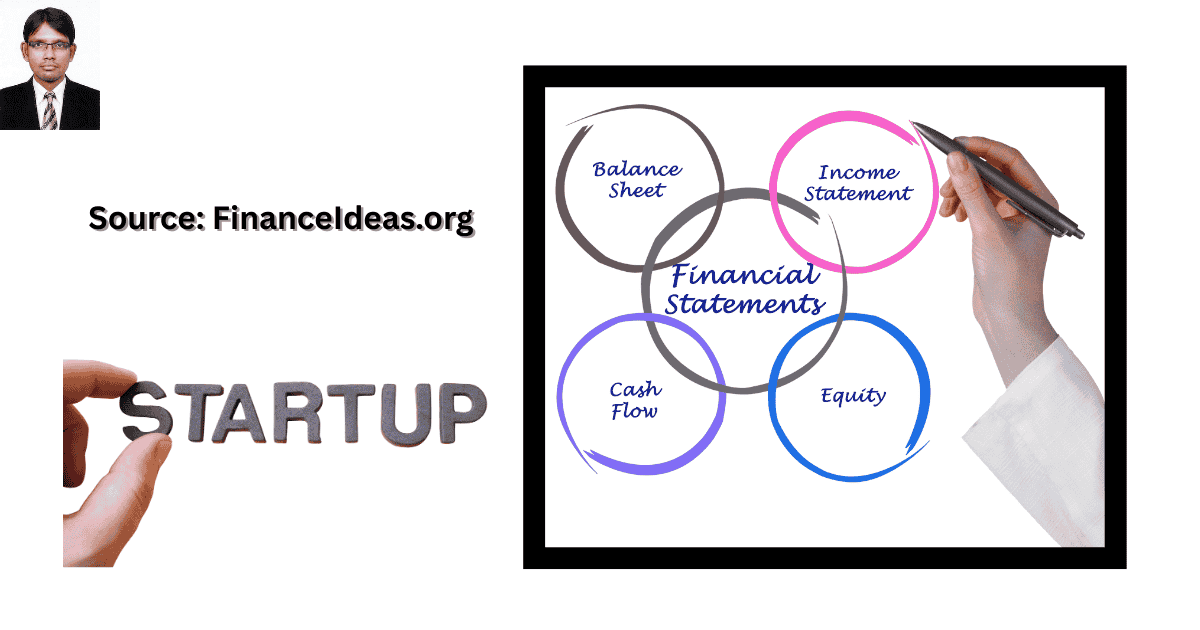
You may disagree & debate with me. Financial statements are one of the main factors in a startup loan. A healthy balance sheet means financial solvency & assured against bankruptcy.
Hmm, your CPA guided you enough & you are correct according to accounting principles. Time has changed & traditional concepts, such as financial statements, are the precondition to get credit approval, which is 50% true.
According to my recent study, American lenders carefully check financial behaviour with the balance sheet. They want to make sure Predictability & they are correct. Why? An uncertain economy forced banks, i.e., lenders, to provide funding for those founders who will not collapse. Therefore, they assign 50% score to stability & remaining 50% score to financial statements.
Naturally, you have many questions & I am writing this article to answer those questions. I believe my question to answer oriented article guides you enough. It will help you not only to make a correct startup decision but also help you to understand how a balance sheet can gain lenders’ confidence. Let’s start with the following:
Finance Ideas AI Snippet Box | Tapos Kumar
What makes a financial statement look safe to lenders?
Consistent revenue growth, predictable expenses, stable profit margins, and enough cash to handle short-term bills can make a financial statement safer. All of this makes the business look less risky and shows it is being managed responsibly.
Even if the company isn’t making huge profits, lenders prefer a business that is steady and reliable over one that sometimes makes a lot but other times struggles.
Related Articles
- Loan for start up: Fund Your Dream
-
How US lenders define risk: If Lenders Say You’re “High Risk,” Read This First
-
Why Startup Loan Rejections Feel Vague: And Why Lenders Stay Silent?
-
What lenders see in bank statements: But Never Explain
-
90-day plan after startup loan denial: Here’s the Smarter 90-Day Move
-
Risk memo after loan denial: What lenders document about you?
-
Cash conversion cycle lenders model: Denied Again? Read this
-
Bank portfolio math: Why Perfect Borrowers Hear No
-
Capital preservation bias: What Founders Get Wrong?
-
Founder distribution problem: The Hidden Risk Behind Owner Pay
- Loan approval momentum effect: What Most Founders Miss?
- Bank relationship capital: How Founders Build Banker Trust
-
Interest rates vs risk appetite: The Credit Market Secret Most Founders Miss
-
Industry credit cycles: The Lending Window Most Founders Miss
The 90-second lender scan?
The first impression of your financial statement is important. Credit analysts review thousands of financial reports over their careers. So, they know how to recognize patterns. Just as doctors can sometimes identify medical problems quickly from symptoms, experienced lenders can detect financial instability from the shape of the numbers themselves. After studying for several months, I detected some factors that lenders closely watch in the first 90 seconds. Yeah, this is not final approval, but first impressions play a significant role in credit sanction.
Below, I have explained it step by step so that you can understand every step & their expectation in each step. Let’s read it:
Step 1: Revenue stability check
Lenders first check revenue trend & stability. They scan several months or years of sales data. They closely observe the shape of revenue. If they found a consistent pattern, then they trust it for loan sanction. Similarly, a sudden burst of activity raises questions about whether sales depend on temporary factors such as seasonal events, one-time contracts, or unstable markets.
The more predictable behavior led to favorable credit approval & unpredictable activities raise doubt.
Step 2: Expense shock detection
Next, analysts look for unexpected cost jumps. Sudden increases in operating expenses can suggest poor financial planning, unstable supply costs & reactive management decisions.
When expenses appear controlled and consistent, lenders interpret this as a sign that management understands operational costs and plans ahead.
Therefore, businesses with stable expense behavior appear easier to manage during economic pressure.
Step 3: Margin consistency signal
Margins disclose whether revenue and expenses remain balanced. During the quick scan, analysts look for unusual margin swings.
Large fluctuations suggest pricing instability, supply chain disruptions, or operational inefficiencies. Consistent margins, on the other hand, indicate that the company maintains pricing discipline and cost control.
This signal increases lender confidence because it suggests the business can maintain profitability under every condition change.
Step 4: Liquidity survival test
The final step of the quick scan is liquidity. Analysts quickly check whether the business appears capable of handling a temporary revenue slowdown.
Companies with visible working capital show reliability. Even modest liquidity reserves can signal that the company has prepared for uncertainty. Therefore, liquidity management is one of the strongest indicators of financial stability within the banking system.
Why do I believe financial stability is a perception problem?
I have conducted a field study on rejected loan applicants. The objective was to find out what these founders think about credit rejection. According to my study, about 85% loan applicants believe that they got rejected for weak financial performance.
Hmm, from an accounting perspective, I can judge their perception, but I think they miscalculate the unstable economy. Accounting predicts based on historical data, but finance forecasts based on the current situation.
Only 15% loan applicants understand that they got rejected for unclear financial behavior. When revenue, expenses, and cash flow move unpredictably, analysts can’t understand how your business will behave during stress.
You may want more evidence so that my study can be trusted. Let’s see what the US government site’s research said. US government economic research shows that businesses able to maintain operational stability during shocks are more likely to survive downturns.
For example, economic resilience studies conducted by the US Census Bureau examine how firms adapt to disruptions such as supply shocks, demand changes, and regional economic changes.
These studies consistently highlight this = Businesses with structured operational behavior have a tendency to recover faster and maintain continuity during economic disruption.
So, their study finds similar things that my current study found. Now the question is, how it impacts on perception. Credit analysts apply this same logic when assessing financial statements.
They are searching for signals that indicate the company can maintain control when conditions change.
I hope you have understood it & now, your mind may ask about those signals that make financial statements safe. Don’t worry, my next question will explain them.
The three signals that make financial statements feel safer?
When banks, i.e., lenders, review your financial data, they check 3 major qualities. This is not something that is required by US lending regulations; instead, lenders do it from their experience. They have analyzed thousands of applications, so they know what signals make a stable company separate from volatile ones. Let’s read those signals:
Signal One = Predictability
Your financial statements should indicate Predictability. Lenders want to know a logical growth pattern from your financial data. I don’t mean your constant growth.
I don’t know, but your business may fall under seasonal businesses, construction firms, and tourism sectors & fluctuation is common here. Now you may ask me, then what is Predictability? In my view, Predictability means that the fluctuations follow an identifiable pattern.
Hmm, for example:
- a landscaping company growing during spring and summer
- a retail store seeing predictable holiday sales increases
- a consulting firm generating stable monthly service income
In simple words, when you have repeated financial behavior, lenders get more confidence to predict future outcomes. If patterns change constantly then lenders doubt & can’t predict an accurate future outcome.
So, if lenders can’t predict your behavior, then why will they approve your loan.
My advice
You could have volatile revenue & it is not a problem. Say, you can’t avoid volatile revenue. In this case, you should explain it clearly in financial documents. This is because predictable seasonal behavior is safer than unexplained volatility.
Signal Two = Control
The second signal is management discipline. Credit analysts look for signs that leadership manages financial behavior rather than reacting to it.
Lenders check the following indicators for operational control:
- consistent cost management
- even gross margins &
- planned operational investments instead of sudden spending spikes
Analysts wonder whether management is responding to problems rather than executing strategy when expenses surge unexpectedly. When costs follow structured planning, the opposite message appears.
My advice
Document operational planning. Remember that a clear financial strategy communicates control and reduces perceived risk.
Signal Three = Resilience
Even well-managed companies encounter disruptions. So, economic cycles, supplier delays, or regional slowdowns can impact revenue.
The final signal lenders look for is resilience. Resilience appears when businesses maintain buffers that protect them from temporary challenges. Lenders usually want to know how your business can absorb stress.
These buffers include:
- working capital reserves
- diversified customer sources &
- easy cost structures
As per the lender’s view, businesses without these buffers can appear vulnerable even if profits are strong.
For this reason, a company generating excellent revenue but operating with minimal liquidity can be fragile from a credit perspective.
My advice:
I recommend that you develop financial cushions that allow the company to operate through temporary disruptions without immediate external financing.
Finance Ideas TLDR | Tapos Kumar
- Lenders analyze patterns with totals.
- Even revenue growth signals lower risk.
- Predictable expenses increase lender confidence.
- Stable margins indicate operational control.
- Healthy working capital reduces liquidity risk.
Frequently Asked Questions About Financial statement stability optics?
Why do lenders trust boring financials more than fast-growing ones?
This is because predictable businesses are easier to underwrite than unpredictable ones.
Lenders prefer predictable repayment ability more than a fast-growing trend. A business growing rapidly with irregular revenue patterns refers to uncertainty in forecasting. On the other hand, a slower, steadier business provides clearer visibility into future cash flow. This is not my personal view; it is backed by US lending regulation. And, banks, i.e., lenders, do it according to American lending law. For example, the Federal Reserve Bank of St. Louis consistently shows that volatility can increase financial risk in lending environments.
My recommendation:
I suggest you show if your growth is fast but uneven. You should explain:
- What caused the spikes
- whether they are repeatable &
- How are you stabilizing future revenue
Can a profitable business look financially unstable?
Yes. Profit alone does not guarantee stability if the path to that profit looks inconsistent.
Lenders separate outcomes from behavior. You may show a strong annual profit. But if that profit comes from a few large, irregular deals, hmm, sudden cost reductions, or say one-time opportunities. Then the lender questions whether that performance can continue.
My advice:
I suggest you break down your profit sources. And, show:
- recurring vs one-time income
- stable vs variable cost drivers
This activity will help lenders to understand how profit is generated & ultimately, they will trust more.
Why do lenders get nervous about a sudden improvement in financials?
Lenders become nervous because quick improvement without valid reasons can be temporary or unsustainable.
From a lender’s perspective, quick improvement raises the following questions:
- Is this growth repeatable?
- Was it driven by a one-time event?
- Will performance drop after financing is issued?
This is relevant if your industry is affected by short-term demand spikes.
My tips:
Quick performance is not bad, but you should have a document with a reason.
For example:
- new contracts
- pricing strategy changes
- operational efficiencies etc
Such an explanation helps lenders to understand your business story. Therefore, it becomes a strength instead of a concern.
What makes lenders question expense behavior?
According to my study, it is inconsistent cost patterns.
Say, your business rises expenses unpredictably. In this case, lenders doubt the following question:
- Is the business reacting to problems?
- Are costs out of control?
- Could margins collapse under pressure?
The moral is = Expense behavior discloses management discipline more than revenue.
Do these:
You should create a simple explanation for any unusual cost movement. Even a short note can significantly improve lender confidence.
How far back do lenders look when judging stability?
According to my analysis, 2–3 years, but recent trends carry more weight.
Say, your past is stable, but recent is volatile. In this situation, lenders, i.e., banks, doubt & hesitate to approve credit. Lenders want to see long-term consistency, recent stability & direction of change.
Do this:
If your recent numbers improved, highlight the transition clearly & also show how the business evolved.
Can explaining financial patterns improve approval chances?
Yes. Clear explanation reduces perceived risk. It helps lenders to predict future performance.
Do this:
I suggest you include a short description with your financials that explains:
- What changed?
- Why did it change? &
- What will happen next?
This activity will help lenders to understand financial statements & can make an easy final decision.
Tapos’s Last Thought
Before submitting a loan application, you should make your financial statement understandable. From a financial statement, can a credit analyst understand your revenue, costs, and cash flow in 90 seconds? First, you need to make sure of this.
Anyway, how was my article? Do you get an answer? If not, then ask me in the comment box. I read every comment & response with bonus tips. So, don’t hesitate to ask me if you have more questions.
Now, I have to stop here. My cooking is complete, & I feel hungry. So, it is time to eat. I wish you success in your business.
References & Sources
Below is the lists of sources that I have used to write this article:
- Federal Reserve Bank of St. Louis – Financial Data (FRED)
- U.S. Small Business Administration (SBA) – Loan Requirements
- Financial Stability Oversight Council (FSOC) – Systemic Risk Insights
- U.S. Bureau of Economic Analysis (BEA) – Business Activity Data
Disclaimer
The information provided in this article is author’s view & only for educational purposes. This is not a startups advice. This is not a sponsor post & not an investment advice. Do your research before making any important financial decision. Therefore, Finance Ideas will not be liable for your financial loss.