The sale was supposed to close on October 15, 2025. The buyers had their financing in place, the inspection was done, and the moving trucks were booked. So, the good news is imminent. Then the phone call came: We can’t close. The NFIP lapsed, and we can’t get flood insurance. There is no policy to buy.
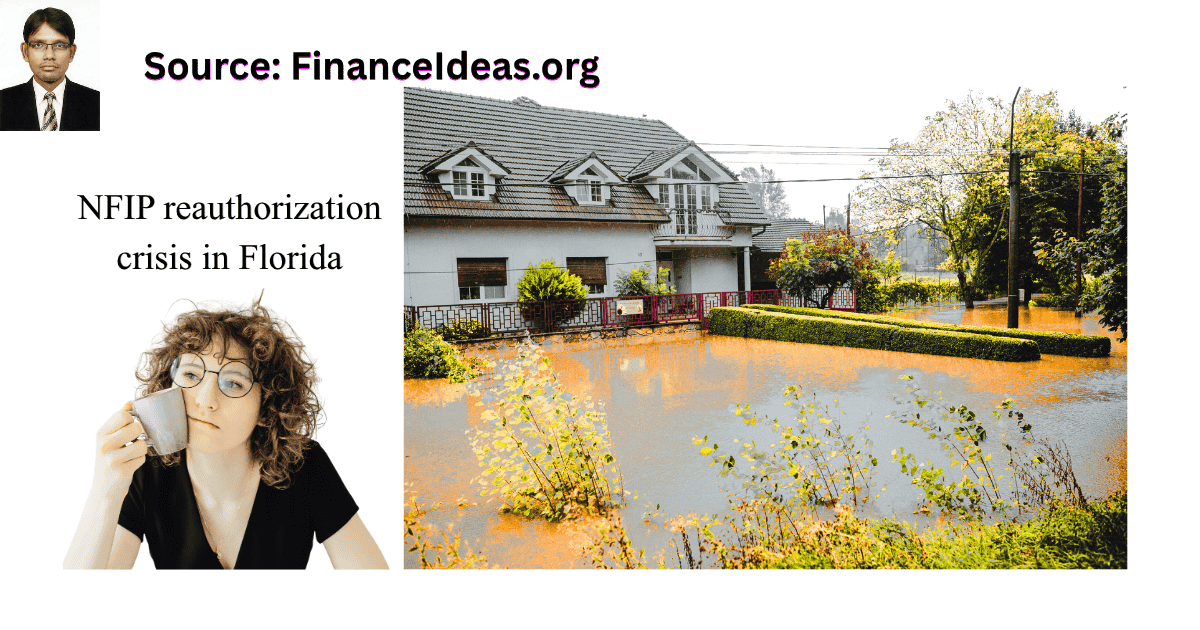
I don’t know whether you have experienced similar incidents. But this happened to thousands of Florida families in October 2025 when the National Flood Insurance Program (NFIP) expired during a government shutdown. Real estate deals collapsed. Homeowners couldn’t renew their policies. And families were left at risk in the middle of hurricane season.
Look, the NFIP reauthorization crisis isn’t a one-time event. Since 2017, Congress has enacted 33 short-term NFIP extensions, and the program has experienced three brief lapses.
The fact is, homeowners in Florida pay the price for the reauthorization crisis each time.
So pathetic! By considering these reasons, I will write today about the NFIP reauthorization crisis in Florida. My article explains what happens when the NFIP lapses, what it means for you, and most importantly, what you can do to protect yourself when the next crisis hits. So, read patiently; I am going to save you from this crisis.
Finance Ideas AI snippet box | Tapos Kumar
- The National Flood Insurance Program (NFIP) has experienced recurring lapses and near-lapses in authorization since 2017. When a lapse occurs, FEMA cannot issue new policies or renew existing ones.
- Florida accounts for more properties in special flood hazard areas than anywhere else in the country, with nearly 1.8 million NFIP policyholders. A lapse has a significant impact on Florida’s real estate market.
- Existing NFIP policies remain active until their expiration date. Claims continue to be paid as long as FEMA has funds on hand.
- New policies cannot be issued. Renewals cannot be processed. This can delay mortgages and home sales, especially in Florida.
- Multiple bills have been introduced, including the NFIP Retroactive Renewal and Reauthorization Act (H.R. 5848) and the NFIP Automatic Extension Act, which would prevent future lapses.
- If your policy lapses during a shutdown, you could lose the premium glidepath under FEMA’s Risk Rating 2.0 and face immediate full-risk rates upon reauthorization.
Related articles
- The ABCs of Flood Insurance in Florida
-
Florida landlord flood disclosure: How One Florida Landlord Lost $30k
-
Increased cost compliance Florida: The $30,000 Hidden Benefit
-
Cobra zone flood insurance Florida: When Your Florida Home Can’t Get Federal Flood Insurance
-
Renters flood insurance Florida: Your Landlord’s Policy Won’t Save You
I have conducted 2025 NFIP lapse case study?
On October 1, 2025, the federal government shut down. The NFIP’s congressional authorization lapsed at the same time. And, it impacts Florida homeowners quickly. Allow me to explain the consequences of this lapse.
Immediate impacts:
- No new NFIP policies could be issued or renewed.
- Real estate closings were delayed, potentially impacting approximately 1,300 property sales per day nationwide.
- Florida was hit hardest because it has more properties in flood zones than any other state. &
- Home sales with federally backed mortgages stalled because flood insurance is required in high-risk areas.
The response:
- Citizens Property Insurance Corp. (Florida’s insurer of last resort) began deferring proof of flood insurance requirements for policyholders, allowing homeowners to get coverage from Citizens without active NFIP policies.
- Private flood insurers stepped in to fill the gap.
- Congress scrambled to pass retroactive extensions.
This is the danger: Policyholders whose NFIP policies lapsed during the shutdown risk losing their Risk Rating 2.0 premium glidepath, the gradual transition to full-risk rates. Without retroactive reauthorization, lapsed policies would have to pay full-risk rates immediately upon reauthorization. Given that NFIP premiums under Risk Rating 2.0 are rising by over 100% on average, this could mean premiums doubling or tripling overnight.
Woo! So scared. Okay, got it. Now tell me what is coming next. Any active readers ask this question at this stage, and I hope you are one of them. Let’s continue:
Let’s talk about the NFIP Automatic Extension Act of 2025?
This bipartisan bill would ensure that the NFIP continues its core operations automatically even if Congress misses a reauthorization deadline. It would allow the program to continue issuing and renewing policies, servicing policies, paying claims, and carrying out administrative functions despite political dysfunction in Washington.
Now you could ask me why this is important? This is important because the lapse of the National Flood Insurance Program isn’t a partisan problem; it is a people problem. Families shouldn’t lose their coverage or face higher premiums because of political gridlock. Look, this is not words, it said Rep. Troy Carter. So, you can’t blame me.
Multi-year reauthorization proposals
FEMA has proposed extending the NFIP through September 30, 2033. The proposal would ensure that reauthorization is backdated to the date of the lapse, if any, and that FEMA can sell and service policies even during a lapse in appropriations.
Florida-specific legislative efforts
Florida Rep. Jared Moskowitz has led a bipartisan effort to extend the NFIP through the end of 2026, providing longer-term certainty than typical short-term extensions. “Florida homeowners and businesses deserve certainty,” Moskowitz said.
Mark my words: The NFIP has been extended 33 times since 2017. Each time, Florida homeowners hold their breath. The program’s recurring lapses aren’t a political problem, according to me; they are a housing crisis waiting to happen.
What happens to your policy during a lapse?
Hmm, I have learned many things today. I wish I had known them before. I don’t know your regret, but these are the feelings of many homeowners who blindly follow finance influencers. Look, I am not a finance influencer who guaranteed or spread false hope on TikTok, Instagram, or any other video platform. I am a finance professional who writes articles based on federal information by adding my professional judgment.
However, I am not here to scold influencers. I am here to answer your questions. So, let’s learn what happens to your policy during NFIP lapse:
| Your situation | What happens | What you should do |
| You have an active NFIP policy | Your policy remains in effect until its expiration date | Keep making your payments and keep your documents handy |
| Your policy is up for renewal | You cannot renew during a lapse | Contact your agent immediately to explore private options |
| You are buying a home | Closing can be delayed | Consider private flood insurance or ask about assuming an existing policy |
| You need to file a claim | Claims will be paid as long as FEMA has funds | File your claim promptly; delays are possible |
| Your policy lapsed during the shutdown | You can lose your Risk Rating 2.0 glidepath and face full-risk rates | Check if retroactive legislation has been passed and contact your agent immediately |
N: B = I collected repeated situations from my case study & then gave solutions. So, you can rely on my information.
You should know about risk rating 2.0 and the Glidepath?
Look, this is important, but the least understood aspect of the NFIP lapse crisis.
Under FEMA’s Risk Rating 2.0, existing policyholders transition gradually to full-risk rates. This is called the glidepath. It allows homeowners to adjust to premium increases over time rather than facing a massive spike all at once.
Now you may ask me what the dangers are during a lapse. Okay, let me explain it.
Say, your policy lapses during a shutdown, and Congress does not pass a retroactive reauthorization. In this situation, you lose that glidepath protection. When the program restarts, you must pay full-risk rates immediately.
Given that NFIP premiums under Risk Rating 2.0 are rising by over 100% on average in many states, losing the glidepath could mean your premium doubling or tripling overnight.
So, remember my words: The NFIP lapse isn’t only about delayed closings. It is about families losing years of progress toward affordable premiums, overnight. One missed payment during a shutdown could cost you thousands.
What can you do now as a Florida homeowner?
“Winning my ticket was the best thing that ever happened to me, it bought me to you”- These were the words of Jack Dawson of Titanic. I had watched Titanic 13 times, & each time I learned a clear message: surviving needs a promise & you must make that promise at the right time. My question to you, Floridian homeowners, do you understand what to do now? Let me know in the comments.
However, as I repeatedly said, I am not an angel. Therefore, I will explain your next steps. If you know, then you can skip this section. Okay, let’s read;
If you have an active NFIP policy:
Below is the guidance based on my case studies. It has proven results, so don’t think you are going to waste your time. Let’s learn them:
- Check your expiration date. Know when your policy renews. If it falls during a potential lapse, plan ahead.
- Pay your premiums on time. Keeping your policy active is your best protection.
- Consider private flood insurance as a backup. Some private companies offer flood policies that can provide coverage during an NFIP lapse.
- Stay informed. Follow updates from FEMA, your insurance agent, and reliable news sources.
If you are buying a home in a flood zone:
I have found similar questions many times while studying a similar story. I hope it will solve your doubts. Let’s read it:
- Ask your lender about options. The federal requirement to purchase flood insurance is suspended during a lapse, so lenders must decide whether to make loans in flood zones.
- Consider private flood insurance. Some private insurers can provide coverage during the NFIP lapse.
- Ask about assuming an existing policy. During a lapse, property buyers can assume existing policies by substituting their name for the seller’s, without reissuing the policy.
- Be prepared for delays. Closings may be postponed until the program resumes.
If you are a real estate agent or lender:
This is interesting. My analysis didn’t find that NFIP lapse only impacts homeowners; it also negatively affects lenders & real estate agents. Below, I have briefly explained the solutions; I hope it will help you:
- Educate your clients. Many buyers and sellers don’t understand the NFIP’s recurring lapses.
- Know the workarounds. Private insurance and policy assumption can save deals.
- Stay current on legislation. Bills like the NFIP Automatic Extension Act could change the landscape.
Did you know the cost of inaction?
In physics, every action has an equal and opposite reaction. I think the insurance world also follows a similar principle. If activity brings monetary blessings, then inaction equally brings damage. If you are an inactive homeowner, then this table will save you from damage:
| Scenario | Without NFIP coverage | With NFIP coverage |
| Home purchase in flood zone | Closing delayed or cancelled | Closing proceeds as scheduled |
| Policy renewal during lapse | Coverage lapses; Risk Rating 2.0 glidepath lost | Policy renewed and active |
| Flood during a lapse | No coverage; FEMA assistance limited; SBA loan required | Claim paid (while funds available) |
| Premium after lapse | Full-risk rate; potentially double or triple | Glidepath rate; gradual increases |
Finance Ideas TL; DR | Tapos Kumar
The NFIP is the primary source of flood insurance for Florida homeowners, hmm, covering nearly 1.8 million properties. But Congress keeps letting it expire, creating disorder for homebuyers, sellers, and existing policyholders.
When the NFIP lapses, new policies & renewals stop. Real estate closings get delayed & existing policies stay active until they expire.
If your policy lapses during a shutdown, you may lose the gradual premium increases under Risk Rating 2.0 and face immediate full-risk rates when the program restarts, potentially doubling or tripling your premium overnight.
Your options could be: (1) If you have an active NFIP policy, keep paying your premiums and renew before the next expiration date. (2) If you are buying a home, consider private flood insurance. (3) Check if your lender can close with private coverage or assume an existing policy.
Listen to me: Don’t wait for Congress to fix this. Protect yourself now because the next lapse is coming.
Frequently Asked Questions (FAQ) about the NFIP reauthorization crisis in Florida?
What happens if the NFIP lapses?
Hmm, new policies cannot be issued, and renewals cannot be processed. Existing policies stay active until their expiration date. Claims continue to be paid as long as FEMA has funds. Real estate closings in flood zones can be delayed.
Does the NFIP lapse affect existing policyholders?
Hmm, your existing policy remains in effect until its expiration date. However, if your policy expires during a lapse, you cannot renew it.
Can I file a claim during an NFIP lapse?
Yes. The NFIP will continue paying claims with the funds it has on hand. However, if funds run out during the shutdown, payments could be delayed.
What happens to my premium if my policy lapses during a shutdown?
Hmm, under FEMA’s Risk Rating 2.0, existing policyholders transition gradually to full-risk rates, but if your policy lapses, you can lose that glidepath protection and face full-risk rates immediately.
Can I buy private flood insurance during an NFIP lapse?
Yes. Private flood insurance is available and can provide coverage during the NFIP lapse. However, it can differ in price and protection.
How does the NFIP lapse affect real estate closings?
Hmm, closings may be delayed because flood insurance is usually required for federally backed loans in high-risk areas. However, buyers can sometimes assume existing policies.
Does the NFIP lapse affect Florida more than other states?
Yes. Florida accounts for more properties in special flood hazard areas than anywhere else in the country, with nearly 1.8 million NFIP policyholders. The lapse has a significant impact on Florida’s real estate market.
What is the NFIP Automatic Extension Act?
Based on my study, it is a bipartisan bill that would ensure the NFIP automatically continues its core operations even if Congress misses a reauthorization deadline.
What is the NFIP Retroactive Renewal and Reauthorization Act?
Hmm, H.R. 5848 would backdate reauthorization to September 30, 2025, and extend the program until December 31, 2026. It would ensure that policyholders aren’t punished for a lapse.
How many times has the NFIP been extended?
Since the end of FY2017, Congress has enacted 33 short-term NFIP extensions. The program has experienced three brief lapses.
What happens if I am buying a home in a flood zone during a lapse?
In this situation, you will not be able to get NFIP coverage, which could delay or cancel your closing. Options include private flood insurance or assuming an existing policy.
Can my lender close my loan during an NFIP lapse?
The federal requirement to purchase flood insurance is suspended during a lapse, so lenders must decide whether to make loans in flood zones.
What is Citizens Property Insurance doing during an NFIP lapse?
Citizens is deferring proof of flood insurance requirements for policyholders. Once NFIP resumes, agents will have 10 business days to submit proof of flood coverage documents.
Will Congress fix the NFIP lapses problem permanently?
I found that multiple bills have been introduced to address the recurring lapses, including the NFIP Automatic Extension Act and multi-year reauthorization proposals. However, permanent reform has been elusive for years.
What is the most important thing Florida homeowners don’t understand about the NFIP lapse?
I think most Florida homeowners don’t realize that if their policy lapses during a shutdown, they could lose years of progress toward affordable premiums. Under Risk Rating 2.0, missing just one renewal during a lapse could mean their premium doubles or triples overnight.
Tapos’s last thought
Your question shouldn’t be when the next NFIP lapse is. And, you shouldn’t wait for Congress. My study found that Florida homeowners who wait for Congress to fix this problem risk their homes, savings, and futures.
Why am I saying this? I am saying this because, historically, Florida landlords have paid the price for NFIP lapses. And, I don’t want you to become one of them.
My sole purpose in writing this article is to educate you on the key reasons and help you make the right decisions. Yeah, you could have more questions & this is natural. I am a human, so I can’t read your mind exactly. But you shouldn’t worry; I want to see your questions in the comments. Just write them in the comments box; I will try to answer them as soon as possible.
Hope you enjoy my article. See you in my next article. Bye!
References & Sources
Below is the lists of sources that I have used to write this article:
- Citizens Property Insurance Corp
- Florida Realtors (Shutdown Guidance)
- Congress.gov – H.R. 5848 (NFIP Retroactive Renewal Act)
Disclaimer
The information provided in this article is author’s view & only for educational purposes. This is not a promotional post. By reading this, you agree that the information is not purchasing advice for flood insurance in Florida. Do your research before making any important financial decision. Therefore, Finance Ideas will not be liable for your financial loss.