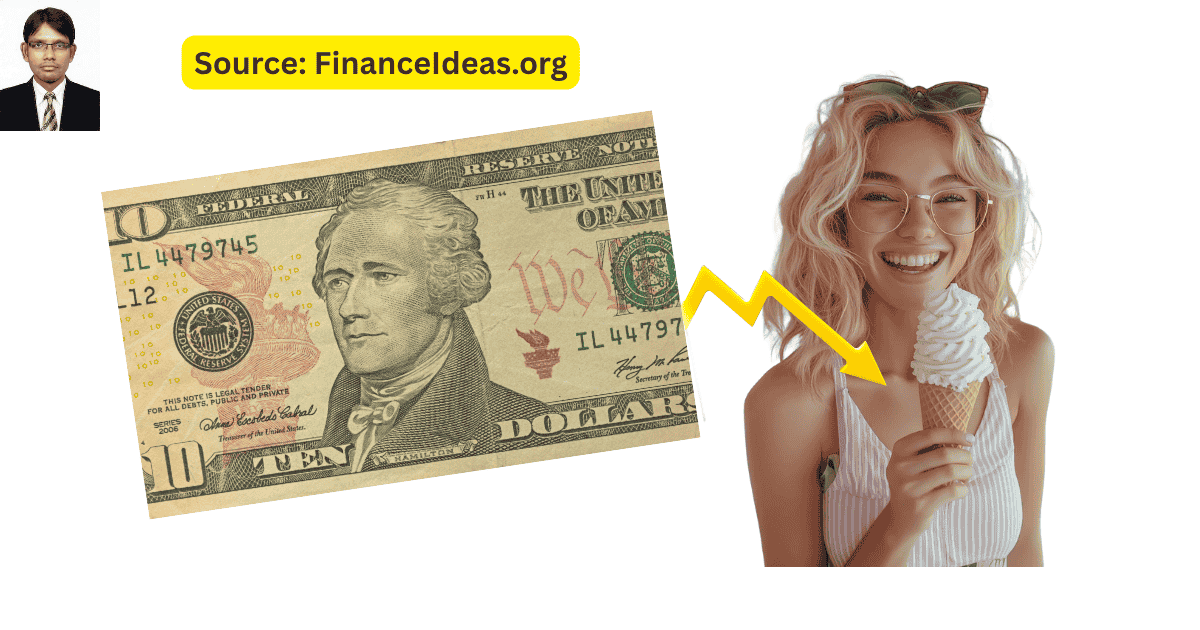
Your $6 coffee can cost $600. Hey Gen Z! I know you are good at math, and I am not joking. Don’t trust me? Okay, let me share a financial incident with you.
Imagine you were sitting in your favourite Onyx Coffee Lab, scrolling through your banking app & saw: $47,000 in savings. So, you felt proud, then sad. You think you are good with money. You’ve been loud about budgeting & saying no to dinners and trips. But somehow, your savings weren’t growing the way you expected.
I can understand your feelings & that is disappointing. Then you looked at your transaction history.
Coffee = $6.27
Coffee = $5.83
Pastry = $4.50
Coffee = $6.41
Lip balm = $12.99
Coffee = $5.92 [N: B = I assume you visited a different coffee shop & this is not the actual price. I just take them as a reference. Seasonality can fluctuate prices. So, check the accurate prices at the specific Coffee Shops]
On and on. Day after day. $6 here. $12 there. As I said, Gen Z is good at math, so you figure out $600 per month in spending. The interesting fact is: you understand this expense as social attention. That means this expenditure is not for survival.
You continue your calculation & found that it is $7,200 per year. Over five years, say invested at 7%; that is $41,000 in lost wealth. Bravo, treat economy!
This story could be awkward for you but it reflects many American Gen Z. And, today’s article is all about it. Take 1 Cold brew & start reading.
Finance Ideas AI snippet box | Tapos Kumar
What is the number 1 thing Gen Z can do today to fight the treat economy?
American Gen Z can create a treat budget intentionally. Doubt me on it? Let me share some federal data. Bank of America found that over 40% of Gen Z already budget for treats. They are on the right track. To do that, Gen Z needs to set aside a specific amount each month ($50, $100, whatever works), and when it is gone, it is gone.
Look, this doesn’t mean deprivation. It is a choice. You are not saying never. You are saying ‘not right now, because I am choosing something better.’ The NIH research on dopamine shows that how incentives are delivered matters; the same reward can be effective or ineffective depending on when and how you deliver it. When you budget for treats, you are working with your brain. You are turning emotional spending into intentional spending.
Relevant Articles
-
HYSA rates drop Gen Z: Why Gen Z Needs a New Savings Strategy
-
gen z loud budgeting: Here’s What Works in 2026.
-
Money dysmorphia Gen Z: 43% of Gen Z Feels Broke. Here’s Why
-
Financial avoidance Gen Z: 33% of Gen Z never checks their bank account. Here’s what it costs them.
Treat economy, in my opinion?
In my view, the treat economy (also called little treat culture) is the phenomenon where Gen Z regularly purchases small, affordable indulgences as a form of self-reward, stress relief, or emotional regulation.
I found that Bank of America supports my definition. Bank of America defines the treat economy as spending on “beauty, jewelry, coffee and travel,” i.e., small splurges that provide immediate gratification.
Below, I have shared some key stats after analyzing federal sites. Let’s read them:
| Statistic | Data (all are federal data, based on article writing date) |
| Gen Z who treats themselves | 92% |
| Buy a treat at least once a week | 55% |
| Treat themselves daily | 21% |
| Say it leads to overspending | 59% |
| Gen Z’s savings-to-spending ratio | Lowest of any generation |
| Spending-to-savings ratio | 1.86; nearly double what they hold in reserve |
| Median savings-to-spending ratio | ≈ 0.5 |
| Universal phenomenon | Spending has risen across all income groups with affluent Gen Z |
My neutral analysis:
- The median savings‑to‑spending ratio for Gen Z sits just below 0.5, meaning most Gen Z households spend more each month than they have in cumulative savings. This confirms they are net spenders rather than net savers.
- Importantly, this isn’t just a “rich kid” phenomenon. Spending on small indulgences (coffee, beauty, jewelry, travel) has risen across all income groups within Gen Z. Bank of America and Deloitte surveys both show that the treat economy is universal, & this is not confined to affluent households.
- I think US federal data reflect a better picture. I found that Gen Z spends about 86% of pre‑tax income, compared to 75% for the average US household. That is the highest strain index of any generation.
The psychology behind the treat economy of US Gen Z
Our Great Depression is our lives. I just recalled Tyler Durden (Brad Pitt) from Fight Club (1999). This line perfectly matches Gen Z. Instead of wars or crises, modern struggles are psychological and financial; this mirrors Gen Z’s growing pessimism.
With this in mind, I tried to understand Gen Z’s psychology and its impact on the economy. I have studied many similar research, cases & federal sites. Then, I found 5 psychological factors that influence American Gen Z’s approach to the economy. Allow me to explain them:
1 = Economic pessimism and the “at least I can feel good now” philosophy
Gen Z has come of age in an era of unprecedented economic uncertainty. The 2008 recession. COVID-19. Inflation. Housing crises. & I don’t know what is coming next (maybe capitalism).
Only 24% of Americans rate current economic conditions as excellent or good. More than half of adults (53%) are very concerned about the price of food, consumer goods, and housing costs.
When the big milestones feel out of reach, i.e., homeownership, financial security, a stable future, “at least I can feel good right now” becomes a powerful coping mechanism.
Taylor Bowley, Bank of America Institute economist, explains: Gen Z invests “in experiences and personal well-being today while searching for new ways to fund tomorrow’s goals.”
I think the appeal isn’t just the item; according to me, it is “having the means to purchase it,” a small, reliable hit of agency in an economy that otherwise feels out of your control.
2 = Dopamine, reward, and the brain’s “now” circuit
NIH‑funded research on behavioral economics shows dopamine signals encode subjective value and alter price sensitivity. In other words, your brain literally rewards you for spending. Behavioral economics confirms people are driven by short‑term gratification, choosing immediate rewards over delayed ones. This is known as present bias.
When you are stressed, your brain craves dopamine. About 37% of American Gen Z report doom spending or stress shopping to cope with anxiety. A purchase provides dopamine relief instantly. The cost, however, is delayed, showing how stress and reward pathways reinforce impulsive spending.
This is the “Now vs Later” brain circuit. Dopamine can favour “Now” processes through phasic signaling in reward circuits. Therefore, the treat isn’t just spending. It is also a neurological response to stress.
3 =Big milestones feel unaffordable
Around 72% of Gen Z delay milestones (like vacations or homes), and 71% fear they may never afford them, making small treats a coping mechanism and substitute for unreachable goals.
If you can’t buy a house, you buy a coffee. If you can’t take a vacation, you buy a candle. Sequentially, the small treat becomes a substitute for the big dream.
4 = The adulting reward culture
Getting out of bed, going to work, and lugging yourself to the grocery store. For Gen Z, these everyday tasks feel like accomplishments that deserve rewards.
About 55% of Gen Z buy themselves a small treat at least once a week. Nearly 60% acknowledge it leads to overspending.
This is the treat-yourself culture on steroids. Every small win, or even just surviving a Tuesday, becomes a justification for spending.
The Real Cost of the Treat Economy?
“Money won is twice as sweet as money earned.” Hey, Gen Z? I know you watched old movies. Have you ever tried to understand the meaning of this line from “The Color of Money” (1986)? What does Fast Eddie (Paul Newman) mean by it? Pause for a second & let me know in the comments.
According to me, it reflects the dopamine hit of quick wins. Small treats deliver instant sweetness, but the long‑term cost is bitter. Similarly, the treat economy has shadow cost & clear spend. Let me describe them:
Shadow cost
Consider this=
$600 per month in little treats = $7,200 per year.
Investment Alternative
If instead invested at a 7% annual return (roughly the long‑term average of the S&P 500):
10 years = about $99,000
30 years = about $680,000
(Assumes reinvested returns and compounding growth.)
I think that is not just coffee or sneakers; that is retirement money.
In short = The treat economy feels small in the moment, but over decades, those indulgences compound into life‑changing opportunity costs.
Clear spend
My analysis found the following as a clear spend:
The slippery slope effect: Nearly 60% of Gen Z admit that treat culture leads to overspending. One coffee becomes two. One pastry becomes a weekly habit. The slope is slippery because the treats are small; easy to justify, hard to stop.
Erosion of financial self-efficacy: Every time you spend on a treat you didn’t plan for, you reinforce the belief that you can’t control your spending. That belief becomes a self-fulfilling prophecy.
The budget triage trap: Yeah, Gen Z’s spending isn’t reckless; it is strategic. As Fortune’s analysis shows, Gen Z is doing exactly what rational actors do when there is no margin for error: cutting the expensive and uncertain (nights out, concerts, dinners) and doubling down on the cheap and reliable (a coffee, a jewelry piece, a beauty splurge that delivers guaranteed gratification at a predictable price point).
It is budget triage, and it makes sense in the moment. But over time, it is devastating.
Follow my 5 simple moves model to take back control from the treat economy?
“It is not who I am underneath, but what I do that defines me.” Hmm, I was in standard 8 & I didn’t understand what Bruce Wayne (Christian Bale) meant by this line in Batman Begins (2005). Anyway, I watched this movie many times.
Later, professionalism taught me its exact meaning. As a finance pro, I understood that actions matter more than intentions. It reminded me that fighting back against overspending requires concrete steps with good intentions.
I know Gen Zers are action takers & they love to take back control of their money. With that in mind, I developed a 5-step model to help you do that. Let me explain them:
Step 1: Name the emotion behind spending
Before you buy a treat, ask yourself:
- What am I feeling right now?
- Am I stressed? Bored? Tired? Lonely?
- Is this purchase about the item, or about the feeling I want?
Your goal: Separate the emotion from the transaction. When you know why you are spending, you can find alternatives.
Step 2: Create a treat budget, intentionally
Don’t eliminate treats. Budget for them.
Your action: Set aside a specific amount each month for treats; $50, $100, whatever works. When it is gone, it is gone.
This is the little treat economy on your terms. You are not depriving yourself. You are choosing.
Step 3: Replace the little treat with a little win
The treat economy is about reward. But the reward is disconnected from the accomplishment.
Your action: Instead of treating yourself for surviving a Tuesday, treat yourself for accomplishing something. Finish a project? Treat. Hit a savings goal? Treat. Survived a Tuesday? That is just Tuesday.
Step 4: Bundle Your Rewards (The NIH-Backed Strategy)
NIH-funded research shows that impulsive choices occur less when organisms choose between a series of small rewards versus a single large reward all at once.
In simple words: You are more likely to save if you bundle your treats. Instead of a daily $6 coffee, save for a weekly $42 “treat fund”, or a monthly $180 splurge.
How can it help you psychologically? Bundling makes the treat feel bigger and more meaningful, and reduces the daily drip of spending.
Step 5: Delay the decision
Behavioral economics shows that how incentives are delivered is important. The same reward can be effective or ineffective depending on when and how you deliver it.
Your action: When you want a treat, wait 24 hours. If you still want it tomorrow, buy it. Most of the time, the urge passes.
Download free resources (PDF) without e-mail
Finance Ideas TL; DR | Tapos Kumar
I think the treat economy (the cultural norm of rewarding yourself constantly) is the hidden reason Gen Z can’t build wealth. 57% of Gen Z buy themselves a small treat at least once a week. 92% treat themselves regularly. And 59% admit it leads to overspending.
So, this isn’t about coffee or pastries. It is about the reasons people spend emotionally; using purchases to cope with stress, anxiety, and economic uncertainty. And, loud budgeting addresses the symptom (overspending). It doesn’t address the cause (emotional spending).
Frequently Asked Questions (FAQs) about the treat economy for Gen Z?
Why is the treat economy so popular with Gen Z?
In my view, the treat economy is so popular among Gen Z because of economic pessimism, the feeling that big milestones are unaffordable, stress coping, and the adulting reward culture.
What is the difference between treating yourself and overspending?
In my view, treating yourself is planned, but overspending is emotional. If you budget for it, it is a treat. If you didn’t plan for it, it is a problem.
Fortune reported Gen Z spends hundreds a month on treat culture. What is the real cost over time?
Let me think. Fortune’s analysis found Gen Z spends an estimated $200 to $250 per month on treating themselves. Ah, that is $2,400 to $3,000 per year. Invested at a 7% historical average return over 30 years, that single daily coffee becomes over $200,000 in lost wealth.
As per my analysis, the cost isn’t just financial; it is also psychological. Every time you spend on an unplanned treat, you reinforce the belief that you can’t control your spending. That belief becomes a self-fulfilling prophecy. The Bank of America report calls this a slippery slope; nearly 60% of Gen Z admit it leads to overspending. The slope is slippery because the treats are small; easy to justify, hard to stop.
How does the treat economy connect to Gen Z’s anti-capitalist rhetoric?
Hmm, this is one of the most fascinating paradoxes in my view. Let me tell you why. Gen Z has built its brand on anti-capitalist rhetoric; yet their spending data tells a very different story.
As Bank of America’s research shows, Gen Z’s transaction data reveals a generation with no savings cushion doing exactly what rational actors do when there is no margin for error: cutting the expensive and uncertain and doubling down on the cheap and reliable. Therefore, the little treat economy is budget triage. Across every other generation, higher-income households are pulling away from lower-income ones in spending growth, creating a ‘K-shaped’ divide. Within Gen Z, that gap has been the smallest of any generation. For these reasons, I think the treat economy isn’t hypocrisy; it is a rational response to an economy where big milestones feel unattainable.
How does loud budgeting connect to the treat economy?
Hmm, loud budgeting addresses overspending but not emotional spending. You can be loud about your budget while still treating yourself daily.
Is the treat economy unique to Gen Z?
No, but Gen Z has mainstreamed it. Older generations treat themselves too, but Gen Z has made it a daily practice.
Is the treat economy a sign of financial irresponsibility?
No, it is a sign of coping. Gen Z is using treats to manage stress in an uncertain economy. Therefore, the solution isn’t shame; according to me, it is strategy.
How does Gen Z’s treat spending compare to older generations?
Bank of America’s recent data shows 92% of Gen Z treats themselves, compared to 45% of Millennials, 38% of Gen X, and 32% of Baby Boomers. But 1 in 5 Gen Z treats themselves daily or multiple times a week. For older generations, treats are occasional. For Gen Z, they are a daily ritual. The fact is: Older generations see treats as rewards for accomplishments. Gen Z sees treats as survival, i.e., a way to cope with the stress of daily life in an economy that feels rigged against them.
What is the CFPB’s perspective on spending habits and financial well-being?
Hmm, the Consumer Financial Protection Bureau’s research on financial well-being identifies that ‘financial habits and norms are a person’s values, ‘ and these values directly shape whether you spend or save.
The CFPB’s Financial Well-Being questionnaire measures two key things: ‘having control over day-to-day, month-to-month finances’ and ‘having the capacity to absorb a financial shock’. I found that the treat economy undermines both. When daily treats become automatic, you lose control over your day-to-day spending. And when you spend $200-$250 a month on treats, you aren’t building the capacity to absorb a financial shock. In short, the CFPB’s framework suggests that financial well-being isn’t about never treating yourself; it is about choosing when and how you treat yourself.
How does the brain reward spending?
Hmm, dopamine (the feel-good chemical) is released during purchasing, creating a reward loop. NIH research shows this is a neurological response.
What is budget triage?
Budget triage is financial first aid: Gen Z cuts the big, uncertain expenses (nights out, concerts, dinners) and leans into small, reliable indulgences (a coffee, a jewelry piece, a beauty splurge).
Actually, it is not irrational; it is a coping mechanism in an economy where milestones feel out of reach.
Tapos’s last thought
From my personal analysis, the treat economy isn’t about coffee or pastries. It is about emotional spending; using purchases to cope with stress, anxiety, and economic uncertainty.
Yeah, loud budgeting addresses the symptom, but it doesn’t address the cause.
This is all about this article. I hope it helped you. And if this article helped you see your spending differently, share it with someone who needs to hear it. Bye!
References & Sources
Below is the lists of sources that I have used to write this article:
Disclaimer
This is not a Sponsored post & the purpose of this article is only education. By reading this, you agree that the information of this blog article is not investing advice. Do your own research before making any financial decision. Therefore, if you lost any money, Finance Ideas will not be liable for this.