We close tomorrow. The flood insurance will not kick in for 30 days.
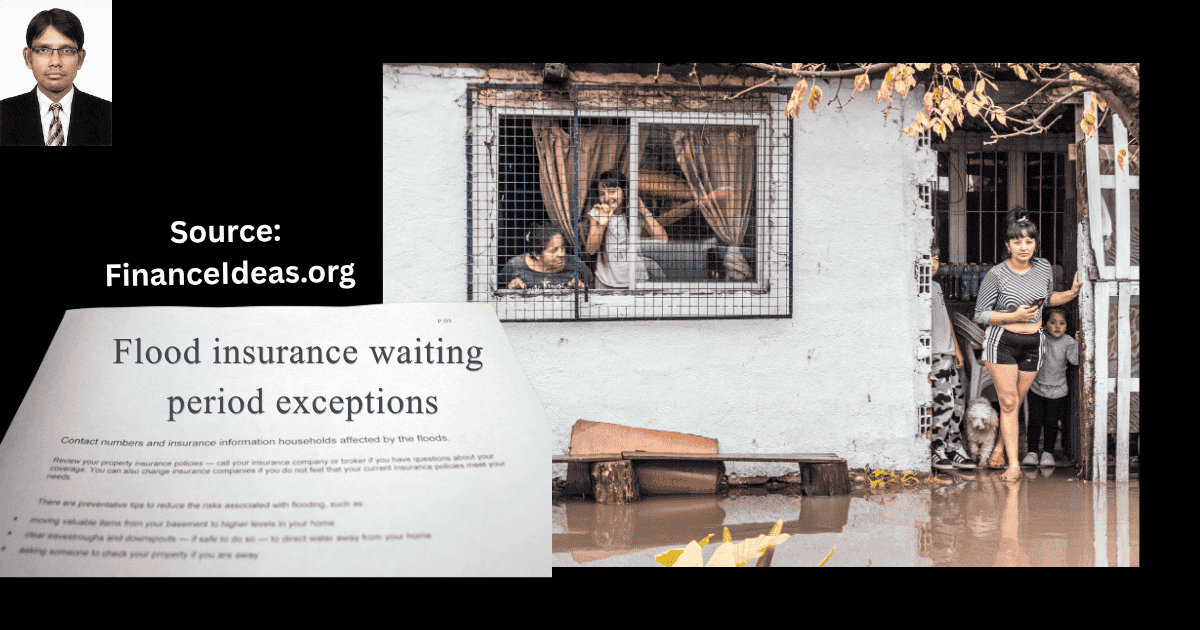
That is the exact text message Alex (not original name for privacy), a first‑time homebuyer in Cape Coral, sent to his real estate agent at 9:47 p.m. on a Wednesday. His loan required flood insurance because the property sat in a FEMA Zone AE. His agent had reminded him weeks earlier. Life got busy. Closing was now 36 hours away, and every carrier Alex called said the same thing: “Sorry, with NFIP you have a 30‑day waiting period. You won’t have coverage at closing.”
Alex nearly lost the house. His lender would not fund the loan without proof of flood insurance. The seller threatened to keep his earnest money. After three sleepless nights, a broker finally found a private carrier that bound a policy the same day.
Alex got his house. I do not know whether you have similar experience like Alex but every day Florida homeowners, buyers, and refinancers slam into the same wall: the NFIP’s 30‑day waiting period. Most do not know there are legal ways around it. Some exceptions are hiding in plain sight. Others require a strategy that I do not find any prominent finance sites talk about.
I am writing this article so that you will never be Alex. Hope you will find my article helpful. Let us start with the following:
Finance Ideas AI snippet box | Tapos Kumar
- New NFIP flood policies take effect 30 days after purchase and payment.
- If flood insurance is required for a mortgage, coverage is effective at closing (not 30 days later), as long as the request is made on or before closing.
- If your property is newly mapped into a high‑risk zone, you have a 1‑day waiting period for the first 13 months after the map revision.
- On federal land, coverage can be effective the next day if the purchase is within 60 days of fire containment.
- Many private carriers offer 10‑day, 7‑day, or even 24‑hour waiting periods, and some have no waiting period at all for loan closings or policy switches.
- Policies lapsed less than 90 days can be reinstated without a new waiting period in certain situations.
Related articles
- The ABCs of Flood Insurance in Florida
-
Florida landlord flood disclosure: How One Florida Landlord Lost $30k
Exception #1: the loan closing exception (no waiting period)?
Under 44 CFR § 61.11(b), if the initial purchase of flood insurance is “in connection with the making, increasing, extension, or renewal of a loan,” the coverage is effective as of the time of loan closing (not 30 days later) provided the written request is received by the NFIP and the premium is presented at or prior to closing.
Who qualifies for the loan closing exception?
I have conducted a detailed study on it. According to my study, you can qualify if you belong to the following:
- Homebuyers purchasing a property with a federally backed mortgage in a Special Flood Hazard Area (SFHA)
- Refinancing homeowners whose lender requires flood insurance
- Property owners obtaining a second mortgage or home equity loan
- Borrowers whose lender determines mid‑loan that flood insurance is needed
- Condominium associations are purchasing a master policy in conjunction with a loan transaction
However, you must know this timing details?
The application must be made on or before the loan closing date. If you request the policy after closing, the 30‑day waiting period applies. If the premium is paid by the lender, title company, or settlement attorney, the effective date is the loan closing date as long as the NFIP receives the application and payment within 30 calendar days of closing. If the insured pays the premium, the effective date is the closing date only if the NFIP receives the application and payment within 10 calendar days of closing.
Make sure the required documentation is available?
The insurer must obtain documentation of the loan transaction, such as settlement papers, to validate that a loan transaction occurred before paying any loss that happens during the first 30 days of the policy. Without that documentation, coverage can be denied.
My tip: Do not leave this to your real estate agent or lender. Call your insurance agent as soon as you have a closing date. Submit the application and payment at least 10 days before closing to ensure the paperwork clears.
Exception #2: The map revision exception (1‑day waiting period)?
FEMA flood maps change. When your property is newly mapped into a high‑risk zone (SFHA), you have a deadline of opportunity.
Under 44 CFR § 61.11(a), during the 13 months beginning on the effective date of a revised Flood Insurance Rate Map (FIRM) for your community, the waiting period for initial flood insurance coverage is reduced to one day. The policy becomes effective at 12:01 a.m. on the calendar day after application and payment.
This exception was codified by the National Flood Insurance Reform Act of 1994. FEMA originally interpreted the period as one year, but a technical oversight was corrected to reflect the statutory 13‑month period. The final rule explicitly recognizes this 13‑month deadline.
How to use the map revision exception?
You can do this by following:
- Receive notice from FEMA that your property has been newly mapped into a flood zone (Zone A, AE, VE, etc.)
- Find the effective date of the map revision
- Purchase flood insurance within 13 months of that effective date
- Your coverage begins the day after you apply and pay
Map revision exception vs. loan closing exception?
In this phase, you should know this comparison. Below, I have given scenario-based exceptions so that you can make the correct decision.
| Scenario | Best exception to use |
| You are buying a home and need insurance for closing | Loan closing exception (no waiting period) |
| You already own a home, and a new FEMA map puts you in a flood zone | Map revision exception (1‑day waiting period) |
| You are refinancing and your lender requires proof of insurance | Loan closing exception |
| You received a LOMA removing you from a flood zone, and later FEMA remaps you into a zone | Map revision exception |
Exception #3: The post‑wildfire exception (next‑day coverage)?
Hmm, this exception is not familiar in Florida because it originated in western states. However, it applies nationwide, including Florida, when flooding originates on federal land and is caused or worsened by post‑wildfire conditions.
Under 44 CFR § 61.11(c), if the Administrator determines that a property is affected by flooding on federal land that is a result of, or exacerbated by, post‑wildfire conditions, the waiting period is one day. Coverage becomes effective at 12:01 a.m. on the calendar day after application and payment.
But, 3 conditions must be met:
- The covered property experiences damage caused by a flood that originated on federal land
- Then, post‑wildfire conditions on federal land caused or worsened the flooding.
- The policyholder purchased the policy either before the fire containment date or during the 60‑calendar‑day period following the fire containment date.
The federal agency responsible for the land determines the fire containment date.
Can this affect Florida homeowners?
Yes. Florida has federal land, including national forests (e.g., Apalachicola National Forest, Ocala National Forest), national wildlife refuges, and military installations. A wildfire on federal land, followed by heavy rain, can cause flash flooding that affects nearby private property. If that happens, you have a 60‑day period to purchase flood insurance with next‑day coverage.
Remember that the Post‑Wildfire Exception is determined on a case‑by‑case basis at the time of loss. You cannot assume it applies. You must request it and provide documentation.
Did you know about additional FEMA-approved waiting period exceptions?
Beyond the three primary exceptions (that I have discussed above) codified in federal regulation, the NFIP’s Mitigation Directorate has issued policy decisions specifying four additional situations where the 30‑day waiting period does not apply. Let us read them:
| Exception | When it applies | Effective date |
| Additional coverage for existing policy + loan | An existing policy needs increased coverage due to a second mortgage, home equity loan, or refinancing | Time of loan closing (with application and premium at or prior to closing) |
| Additional coverage due to map revision | An existing policy needs increased coverage because of a flood map revision | 12:01 a.m. the day after application and premium payment |
| Lender‑forced placement | Your lender determines that an existing loan without flood insurance should be protected | Upon completion of application and premium payment |
| Renewal bill additional coverage | An additional amount of insurance offered in the renewal bill is obtained | As stated in the renewal bill |
These additional exceptions are important for homeowners who already have flood insurance but need to increase their coverage. Do not assume you have to wait 30 days for an endorsement. You may be eligible for immediate or next‑day effective dates.
You should know the storm naming freeze: (Why waiting is dangerous according to my study)?
Once a hurricane or tropical storm is officially named and projected to impact Florida, most insurance companies freeze new policies and policy changes entirely. This applies to both NFIP and private carriers.
So, what does the storm naming freeze mean?
It means the following:
- No new policies can be written
- No upgrades or coverage increases can be made
- No reinstatements for lapsed policies
- Quotes and applications do not count, i.e., the policy must be bound before the freeze
If you wait until a storm is in the forecast cone, you will not get coverage. The NFIP’s 30‑day waiting period already puts you behind. The storm naming freeze closes the door completely.
The only safe strategy, according to me: Purchase flood insurance by April to ensure coverage before hurricane season starts June 1. For NFIP policies purchased in April, the 30‑day waiting period ends in May, so well before the season begins.
NFIP vs. Private flood insurance: (Know these waiting period comparisons)?
If you read my article patiently, then you should ask about waiting periods. All serious readers want to know it in this phase. However, I am talking about this from my personal experience, so differences are expected. After studying thoroughly, I have collected some key differences that could be beneficial for you. So, read it with some extra seconds.
| Feature | NFIP | Private flood insurance |
| Standard waiting period | 30 days | 7–14 days (some carriers 0–10 days) |
| Loan closing exception | Yes (no waiting period) | Often available (0‑day waiting period for closings) |
| Map revision exception | Yes (1‑day waiting period) | Not applicable (private carriers don’t follow FEMA maps) |
| Post‑wildfire exception | Yes (1‑day waiting period) | Carrier‑specific |
| Maximum building coverage | $250,000 | Up to $10,000,000 |
| Maximum contents coverage | $100,000 (actual cash value) | $500,000+ (replacement cost) |
| Loss of use coverage | No | Yes |
| Elevation certificate required | Often | Many carriers waive requirement |
Finance Ideas TL; DR | Tapos Kumar
Look, the NFIP’s 30‑day waiting period is not absolute. These four legal exceptions can eliminate the wait: (1) loan closing = no waiting period if you apply on or before closing; (2) map revision = 1‑day wait if your property is newly mapped into a high‑risk zone; (3) post‑wildfire = next‑day coverage for properties on federal land; and (4) lender‑forced placement = immediate coverage if your lender determines you need flood insurance mid‑loan. According to my study, private flood insurance in Florida now captures nearly 35% of the market, with waiting periods as short as 24 hours. Therefore, you should know which exception applies to your situation and act before a storm is named.
Frequently Asked Questions (FAQs) about Flood insurance waiting period exceptions?
Can I buy flood insurance after a hurricane is named?
No. Once a storm is named and projected to impact Florida, most insurers freeze new policies. You cannot bind coverage. Combined with the NFIP’s 30‑day waiting period, you will not have coverage for that storm.
What is the exact legal basis for the 30‑day waiting period?
The waiting period is codified in 44 CFR § 61.11(d). The general rule is that the effective date of any new NFIP policy is the 30th calendar day after application and premium payment.
If I already have NFIP flood insurance and want to increase my coverage, do I have to wait 30 days?
I do not support this. Let me tell you why. If the increased coverage is required due to a loan transaction (refinancing, second mortgage) or a map revision, the 30‑day waiting period does not apply. The increased coverage can be effective at loan closing or the day after application.
Does the loan closing exception apply if I am paying cash for a home?
No. The loan closing exception applies only when flood insurance is required in connection with a loan. If you are paying cash, you are not required to have flood insurance at all. However, you are strongly encouraged to purchase it voluntarily, and you will be subject to the standard 30‑day waiting period unless another exception applies.
Can a private flood insurance policy have a waiting period shorter than NFIP?
Yes. Many private carriers offer waiting periods of 10 days, 7 days, or even 24 hours. Some have no waiting period for real estate closings or when switching from an existing NFIP policy.
What happens if my NFIP policy lapses? Do I have to wait another 30 days?
If you renew within 90 days of expiration, the new policy is considered a renewal. This is of course don’t mean a new policy. However, if you wait longer than 90 days, you must submit a new application and the 30‑day waiting period applies.
Is there a waiting period for renters’ flood insurance?
Yes. Renters’ flood insurance policies through NFIP follow the same 30‑day waiting period rules. Private renters’ flood policies offer shorter waiting periods.
Can I get flood insurance the same day I apply?
Hmm, same‑day binding is extremely rare for NFIP policies but possible with some private carriers during non‑hurricane season, particularly for loan closings. Neptune Flood offers 0‑day waiting periods specifically for real estate closings and policy rollovers. But I recommend you to study personally & then, make a buying decision.
Does the map revision exception apply if my property was removed from a flood zone?
No. The map revision exception applies only when a property is newly mapped into a high‑risk zone (added to an SFHA), and not when it is removed. If your property is removed, you are not required to have flood insurance, but you should keep it for protection.
How do I find out if my community has a FEMA map revision?
Search your address on the FEMA Flood Map Service Centre (msc.fema.gov). FEMA also publishes notices in local newspapers and sends letters to property owners when maps are revised. You can check with your local planning or building department.
What if my lender requires flood insurance, but I don’t qualify for any exception?
Your lender can close the loan if you provide a paid policy application. The coverage will not be effective until after the 30‑day waiting period, but the lender may accept the application as proof that coverage is pending. Some lenders also accept private flood policies with shorter waiting periods.
Does the 30‑day waiting period apply to commercial flood insurance?
Yes. Commercial properties insured under NFIP are subject to the same 30‑day waiting period rules. Private commercial flood insurance usually offers shorter waiting periods.
Can the 30‑day waiting period be waived in an emergency?
No. FEMA does not waive the 30‑day waiting period for emergencies, including approaching hurricanes. The only legal exceptions are the ones codified in federal regulation and described above.
What is the difference between the waiting period and the flood‑in‑progress exclusion?
The waiting period determines when coverage begins. The flood‑in‑progress exclusion determines what is covered. Even if your waiting period has passed, the SFIP will not pay for a loss caused by a flood that was already in progress before coverage began.
Can I transfer my NFIP flood insurance policy to a new homeowner?
No. NFIP policies are not transferable to new owners. The new owner must purchase a new policy and will be subject to the 30‑day waiting period unless an exception applies.
What if my insurance agent tells me there are no exceptions to the 30‑day waiting period?
Your agent is wrong. Sorry, but true because many agents are not trained on the exceptions. Reference 44 CFR § 61.11 and ask specifically about the loan closing exception and map revision exception. If your agent still refuses, contact the NFIP Call Centre at 877‑336‑2627 or find another agent who specializes in flood insurance.
Does Florida state law affect the waiting period?
Florida state law (including the flood disclosure law HB 1015 discussed in my previous article) does not change NFIP’s waiting period rules. However, Florida law may affect how quickly you can switch carriers or cancel policies. Private flood insurance in Florida is governed by Florida Statute 627.715.
Tapos’s last thought
Okay, I have to leave now. Before going, I want to share some advice for you. I hope it will help you to make a correct decision for flood insurance in Florida. Let’s read them:
- Do not wait for a storm. Purchase flood insurance by April 30 to ensure coverage before hurricane season starts June 1.
- If you are buying or refinancing a home, request flood insurance immediately and use the loan closing exception. Submit your application and payment at least 10 days before closing.
- If your property was recently remapped into a flood zone, purchase coverage within the 13‑month deadline to get the 1‑day waiting period.
- Compare private flood insurance for shorter waiting periods (10 days or less) and broader coverage.
- If you are unsure about your eligibility for any exception, ask your insurance agent specifically about 44 CFR § 61.11. If they do not know, find another agent.
References & Sources
Below is the lists of sources that I have used to write this article:
Disclaimer
The information provided in this article is author’s view & only for educational purposes. This is not a promotional post. By reading this, you agree that the information is not purchasing advice for flood insurance in Florida. Do your research before making any important financial decision. Therefore, Finance Ideas will not be liable for your financial loss.