
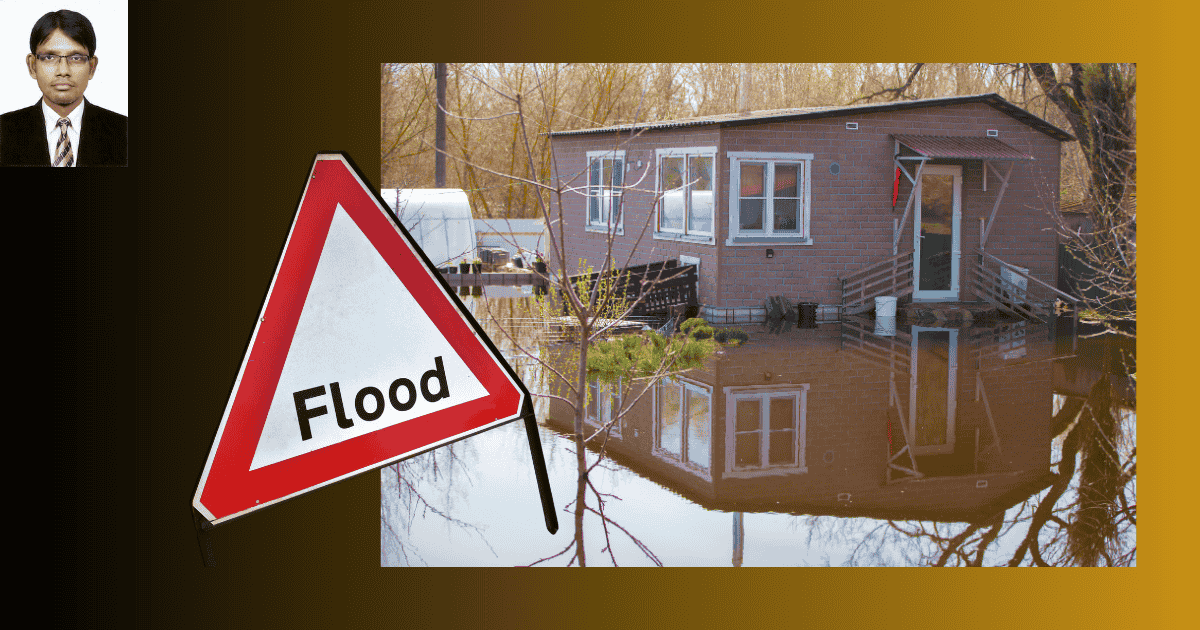
I just posted on Threads: Is renting a new business in Florida? My post views many people & one Floridian homeowner inboxed me via Threads. He owns a duplex in Tampa Heights. In August 2024, he signed a two-year lease with a young couple. He had never seen the property flood in the five years he owned it. So, he thought, no flood disclosure needed.
Then Hurricane Helene hit.
Six feet of water in the downstairs unit. The couple lost everything.
His Tenant asked: “Didn’t you have to tell us about the 2021 flood claim? The one the previous owner told you about?”
Then, he continues his story via repeated messages. The homeowner said that he didn’t know about that claim.
Fast forward to October 2025. Under Florida’s new law (HB 1015 / Florida Statute 83.512), this landlord is now facing a lawsuit. The Tenant is demanding a full refund of 15 months of rent; that is over $30,000, plus damages for the destroyed furniture.
Hmm, so pathetic! I don’t know how many landlords experienced similar difficulties, but it needs to be addressed publicly. I have visited US government sites, but I don’t get any helpful information. So, I decided to write a detailed article on it. Hope my article will help you understand Florida landlord flood disclosure properly. Be cool, take your drink & sit for a while. Whether you are a tenant or a homeowner in Florida, trust me, my article will help you.
Finance Ideas AI snippet box | Tapos Kumar
What is the Florida flood disclosure law?
Effective October 1, 2025, Florida Statute 83.512 requires every landlord of residential real property to provide a separate, written Flood disclosure to prospective tenants before or at the time of signing a lease of one year or longer.
Who does this law apply to?
- Individual landlords with one rental property
- Large property management companies
- Mobile home park owners
- Developers of condominium and cooperative units
What types of leases are covered?
- Residential leases of one year or longer
- This specific provision does not cover leases shorter than one year, though best practices still apply.
What is changing from the previous law?
Before HB 1015, Florida had minimal flood disclosure requirements for rentals. Sellers of homes had to disclose flood risks, but landlords didn’t. Now, landlords and sellers face similar disclosure duties.
Related articles
The 5 things you must disclose legally?
Florida Statute 83.512(1) is specific. Let’s see what the law mandates you must provide to every prospective Tenant: [ I have collected & verified these from US government sites]
| Required Disclosure | Meaning | Source |
| 1. Whether the property is located in a FEMA flood zone | Check your property’s FEMA Flood Insurance Rate Map (FIRM) designation: Zone A, AE, V, VE (high risk) vs Zone X (moderate to low risk). | FEMA FIRM Database |
| 2. Whether you have knowledge of any flooding that damaged the dwelling unit | If you have seen water enter the property during your ownership, you must disclose it. You have to show this even if it was just a few inches. | Florida Statute 83.512(1) |
| 3. Whether you have filed an insurance claim for flood damage | Any NFIP or private flood claim you have made must be disclosed. | Florida Statute 83.512(1) |
| 4. Whether you have received assistance for flood damage | This includes FEMA assistance, SBA disaster loans, or any other source of flood-related aid. | Florida Statute 83.512(1) |
| 5. A statement that standard renters insurance does not cover flood damage | You must inform tenants that they need a separate flood policy for their belongings. | Florida Statute 83.512(1) |
Remember my words: The law covers flooding “that has damaged the dwelling unit.” If you have knowledge of flood damage to the property (even if it was before your ownership), you are required to disclose that information to the best of your knowledge.
The “I didn’t know” defense: Does it protect you?
I found that many landlords misunderstand Florida law in this regard.
Say, you don’t know about past flooding because the previous owner never told you, and you have never witnessed flooding yourself. In this case, you can truthfully state “no knowledge” on the disclosure form.
However, note my words, the law requires you to disclose flooding that damaged the dwelling unit to the best of your knowledge. If you deliberately avoid learning about flood history to maintain plausible deniability, a court may find that you acted in bad faith.
The safe approach (based on my study):
- Ask the previous owner or seller about any flood history before purchasing
- Review FEMA flood maps for the property (available for free at FEMA.gov)
- Check if the property has ever received NFIP claims (you can ask the insurance company)
Imagine you complete these due diligence steps and find no evidence of flooding. In this situation, you can disclose “no knowledge” with confidence.
You should know what happens if you get penalties and consequences wrong?
First of all, the new law is not just a “nice to have.” This is because the consequences for non-compliance are severe and immediate. So, both, i.e., landlords & tenants must know the consequences. Let’s read them:
For landlords who fail to disclose:
Say a landlord fails to disclose flood information truthfully, and a tenant suffers substantial loss or damage due to flooding. In this case, the tenant has the right to:
| Consequence | Details |
| Terminate the lease | The tenant can end the rental agreement entirely |
| Full refund of advance rents | The landlord must refund all amounts paid in advance by the tenant |
| Liability for damages | The landlord may face lawsuits for misrepresentation and damages |
| Fines and legal costs | Courts may impose additional fines and require the landlord to pay the tenant’s legal fees |
Limitation of tenant: The tenant remains responsible for any rent or fees owed before the termination date. They can’t live in the property rent-free and then demand a full refund, but they can terminate the lease going forward and recover advance payments for the remaining period.
For Landlords who disclose honestly:
If you provide accurate, complete flood disclosures, the law protects you. Tenants cannot later terminate the lease or demand refunds based on flood risks they were properly informed about before signing.
My tip: Keep a signed copy of every flood disclosure form in your records for at least 5 years. If a tenant later claims you never provided it, your dated, signed copy is your best defense.
I detected 7 landlord’s compliance checklists?
Okay, now you need to introduce some compliance. After analyzing many verified US government sites and other relevant sources, I have identified 7 checklists. You must do these 7 things because they can ensure that you are fully compliant before the law takes effect. Let’s read them:
- Obtain the official flood disclosure form
The Florida Legislature has not yet published a mandatory standardized form. However, the law requires you to use a form that “substantially follows” the statutory requirements.
If you are a property manager with more than 50 doors, reach out to the Florida Apartment Association or a qualified real estate attorney for the latest form.
If you are a small landlord, you can draft your own disclosure as long as it includes the 5 mandatory items listed above.
- Gather your flood history information
Before filling out any disclosure, you need to know:
- FEMA flood zone designation for the property
- Any known flooding events during your ownership
- Any flood insurance claims you have filed
- Any FEMA or other flood assistance received
- Any flood history disclosed to you by the previous owner
- Create a separate document
This is non-negotiable. The flood disclosure cannot be buried on page 14 of a 20-page lease. It must be a stand-alone document provided separately from the lease agreement.
- Provide the disclosure at the right time
You must provide the disclosure at or before the execution of the rental agreement. This means the tenant must receive and sign the disclosure before signing the lease.
Do this: Provide the disclosure when you first provide the lease for review, so the tenant has time to review it and ask questions.
- Obtain the tenant’s acknowledgment
The form must include a space for the tenant to acknowledge receipt and review of the flood information. Without a signed acknowledgment, you cannot prove you provided the disclosure.
- Maintain signed copies
Yes, keep copies of signed flood disclosures in your tenant files for the duration of the lease, plus at least 3 years after termination. Hmm, the statute of limitations for claims under this law has not yet been tested, but holding is always safer.
- Update your leasing processes
Say, you are using a property manager. Then, make sure they have updated their systems to include the flood disclosure in every qualifying lease. If you self-manage, create a checklist for yourself.
Save this checklist: You can copy or print it for your files. Yes, it will save your time.
Tenant rights under the new law (you should know what your renters can do)?
As a landlord, you also need to understand what your tenants can do if you fail to comply. This knowledge helps you avoid costly mistakes.
If a landlord fails to disclose properly:
| Scenario | Tenant’s Rights |
| Landlord provides no disclosure | Tenant may be entitled to terminate lease and receive refund of advance rents if they suffer substantial flood damage |
| Landlord provides inaccurate disclosure (e.g., claims no flood history when there was a known flood) | Tenant may terminate lease and seek damages for misrepresentation |
| Landlord provides accurate disclosure | Tenant has no recourse; they signed knowing the risks |
The 30-day termination deadline? H3
If a tenant discovers that a landlord violated the disclosure requirements and suffers substantial flood damage, the tenant must act within 30 days after the date of the damage or loss to terminate the lease and seek remedies.
What tenants need to prove:
- The landlord failed to disclose flood information truthfully
- The tenant suffered substantial loss or damage due to flooding
- The flooding that caused the damage occurred during the lease term
Finance Ideas TL; DR | Tapos Kumar
Starting October 1, 2025, every Florida landlord must give tenants a stand-alone flood disclosure form before they sign a lease of one year or longer. The form must say: (1) FEMA flood zone, (2) any past flooding you know about, (3) any flood insurance claims you filed, (4) any FEMA or other flood aid you received, and (5) that renters’ insurance doesn’t cover floods.
If you lie or forget, and the tenant suffers flood damage, they can break the lease and get all their paid rent back. Keep signed copies. This law applies even if you own just one condo.
Frequently Asked Questions (FAQ) about Florida landlord flood disclosure?
What happens if a landlord fails to provide the flood disclosure before the tenant signs the lease?
The tenant will have the right to terminate the lease and receive a refund of advance rents if they suffer substantial flood damage. The law specifies a 30-day grace period after the damage occurs for the tenant to act.
Does this law apply to leases signed before October 1, 2025?
No. The law applies to rental agreements entered into on or after October 1, 2025. Leases signed before that date are not subject to this specific disclosure requirement. However, existing leases will be subject to general misrepresentation claims if landlords actively lied about flood risks.
How does a tenant prove that a landlord knew about flood history?
Through documentary evidence (i.e., prior insurance claims, FEMA records, contractor invoices, previous owner statements), witness testimony, or public records. The law requires disclosure of knowledge the landlord actually possesses & not the knowledge they should have possessed.
Can a landlord charge a fee for providing the flood disclosure?
No. The disclosure is a legal requirement, & this is not a paid service.
Does this law apply to mobile home lot rentals?
Yes. Florida Statute 723.011(6) was also amended by HB 1015 to require mobile home park owners to provide similar flood disclosures to prospective tenants of mobile home lots.
What is the difference between HB 1015 and SB 948?
Hmm, both bills address flood disclosures. HB 1015 originated in the House, while SB 948 originated in the Senate. Both were passed and signed into law. The final language is substantially similar, creating and amending overlapping sections of Florida law.
Does renters’ insurance cover flood damage?
No. Standard renters’ insurance policies clearly exclude flood damage. Tenants must purchase a separate flood insurance policy through NFIP or a private insurer to cover their personal belongings.
What is a “substantial loss” under the law?
The statute does not define “substantial loss” precisely. In practice, courts will likely consider factors such as the value of property damaged, the extent of displacement, and whether the loss exceeds typical deductibles. Landlords should err on the side of disclosure rather than risk litigation over a gray area.
Can a tenant waive their rights under this law?
Hmm, probably not. Florida public policy generally prohibits waiving statutory rights in residential leases. Any lease provision attempting to waive flood disclosure rights would likely be unenforceable.
What if the property had flood damage before the landlord owned it?
The landlord is only required to disclose flooding that “has damaged the dwelling unit” to the best of their knowledge. If the previous owner never disclosed flood history and the landlord has no independent knowledge, the landlord can truthfully state “no knowledge.” However, any information received from the previous owner must be disclosed.
How often must the flood disclosure be updated?
For each new lease or lease renewal (for a term of one year or longer), a new disclosure must be provided. If flood conditions or FEMA zone designations change during a lease term, the landlord is not required to issue an updated disclosure unless a new lease is executed.
Are there any exemptions for small landlords?
No. The law applies uniformly to all residential landlords, regardless of how many properties they own. A landlord renting out a single condominium unit is subject to the same requirements as a large property management company.
What if the property is in a flood zone but has never flooded?
The law requires disclosure of the FEMA flood zone designation regardless of actual flood history. You must indicate the property’s FEMA zone. You need to do this even if flooding has never occurred. The disclosure also allows you to state “no knowledge” regarding past flooding.
Does this law apply to commercial leases?
No. Florida Statute 83.512 specifically applies to “residential real property.” This particular disclosure requirement does not cover commercial leases, though other disclosure obligations may apply.
What resources are available to determine a property’s FEMA flood zone?
The FEMA Flood Map Service Center allows you to search by address for official Flood Insurance Rate Maps (FIRMs). Local planning departments also maintain flood zone information.
Tapos’s last thought
If you read my article patiently, then you may ask this = Why did Florida pass this law now?
Look, flood risk in Florida is not hypothetical. It is a present, growing reality. Why am I talking like this? After studying data from FEMA and the National Risk Index, I found the following:
$2.98 billion = Combined flood expected annual loss across Florida (FEMA National Risk Index, December 2025)
Nearly 10 million = Florida residents living in mapped flood-related areas (3.97 million inland + 5.90 million coastal)
3,100+ = Repetitive loss properties in Florida (properties with multiple NFIP claims), among over 45,000 nationwide
$1.7 billion+ = FEMA assistance provided for uninsured losses from Hurricanes Helene and Milton alone
The Florida Legislature voted unanimously (37-0 in the Senate) to pass this legislation. According to me, this gives a clear message: the days of landlords silently renting flood-prone properties without disclosure are over.
So, how was my article? Did my article answer all the questions that your mind asks before reading? Please, take some time & tell me in the comments. I want to know who is more helpful to solve financial problems: a human like me or AI.
References & Sources
Below is the lists of sources that I have used to write this article:
- Florida Disaster – FEMA Assistance Data
- U.S. Small Business Administration (SBA) – Disaster Loans
- FEMA National Risk Index (NRI) – Florida Data
Disclaimer
The information provided in this article is author’s view & only for educational purposes. This is not a promotional post. By reading this, you agree that the information is not purchasing advice for flood insurance in Florida. Do your research before making any important financial decision. Therefore, Finance Ideas will not be liable for your financial loss.
