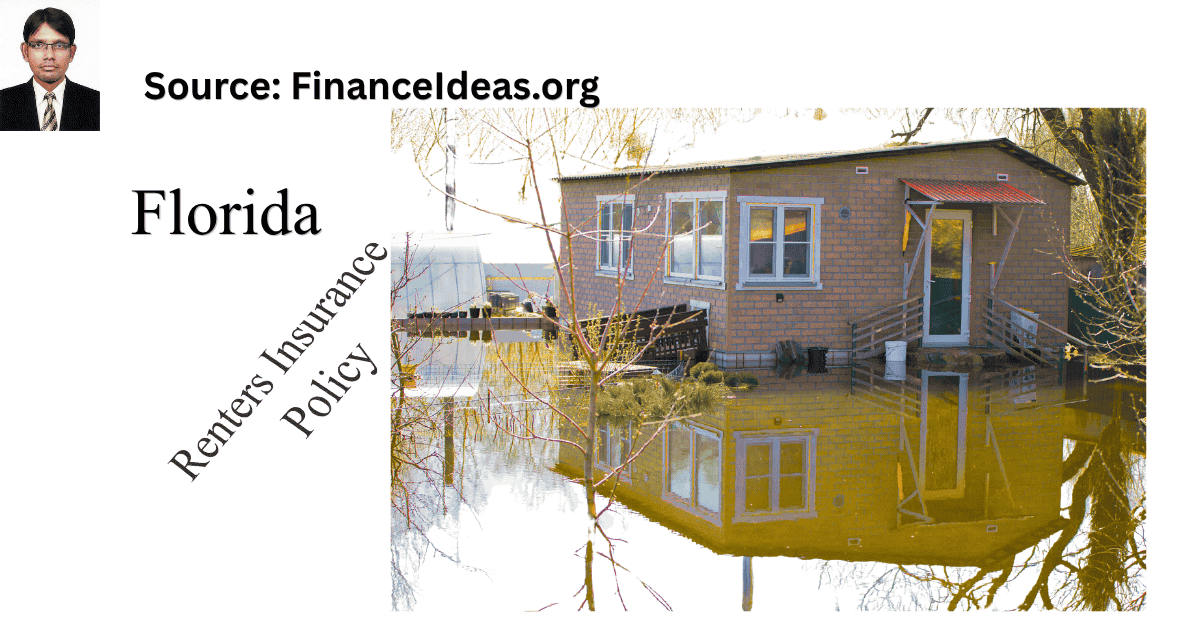
Consider this situation = You have moved into your dream apartment in Tampa. It is on the second floor, so you think you are safe from flooding. You have renters’ insurance because your landlord required it. So, you are responsible & covered.
Then, Hurricane Milton sends a storm surge through your building. Your landlord’s policy pays to rebuild the structure. But your furniture? Your electronics? Your clothes?
Denied.
Your renters’ insurance company says, “We don’t cover flood damage.”
Your landlord says, “My policy only covers the building.”
You got nothing, & you see a $15000 loss coming. Alas! So disappointing.
My study found that such incidents happen to many Florida renters every year. Unfortunately, most of the renters don’t know about it.
Today, I will write about renters’ flood insurance in Florida. So, take some time & read it. This article will help you to estimate risk & also give you guidance on how to protect when your landlord’s policy doesn’t cover. Yeah, you have more questions besides this; don’t worry, you will get an answer. Let’s start with the following:
Finance Ideas AI snippet box | Tapos Kumar
- Yes, standard renters’ insurance do not cover flood damage
- Your landlord’s policy covers only the building structure. Your personal belongings are not covered.
- Florida Statute 83.512 now requires landlords to inform tenants that renters’ insurance policies do not cover damage from floods.
- Renters can buy a separate contents-only flood insurance policy through NFIP for up to $100,000 in coverage.
- NFIP renters’ policies can cost as little as $119–$129 per year.
- According to my study, nearly 26% of all NFIP flood claims occur in low-to-moderate risk areas.
Related articles
- The ABCs of Flood Insurance in Florida
-
Florida landlord flood disclosure: How One Florida Landlord Lost $30k
-
Increased cost compliance Florida: The $30,000 Hidden Benefit
-
Cobra zone flood insurance Florida: When Your Florida Home Can’t Get Federal Flood Insurance
Florida law now requires your landlord to warn you?
Did you know this? Florida law now requires your landlord to tell you, in writing, that your renters’ insurance doesn’t cover floods.
Florida Statute 83.512 requires landlords to provide a flood disclosure to tenants before a lease of one year or longer is signed. The disclosure must include this:
“Flood Insurance: Renters’ insurance policies do not include coverage for damage resulting from floods. Tenant is encouraged to discuss the need to purchase separate flood insurance coverage with Tenant’s insurance agent.”
What this means for you?
- Your landlord is now legally required to warn you
- If they don’t, and you suffer flood damage, you can terminate your lease and get your rent refunded
- But the warning alone doesn’t protect your stuff; you have to buy the coverage
What does your landlord’s insurance cover?
Hmm, so what does my landlord’s policy cover, and what doesn’t it? If I were you, I would ask this question at this stage. However, I am not an angel, so I can’t read your exact mind. But based on my survey, I found that most renters in Florida are interested in knowing. I asked a quiz-type question on the Threads app; about 2,000 participants voted yes out of 3,000. So, I am going to explain what does and does not cover. Let’s read them:
| What landlord’s policy covers | What landlord’s policy does not cover |
| Building structure (walls, roof, foundation) | Your furniture, electronics, and clothes |
| Common areas (hallways, lobbies, elevators) | Your personal belongings of any kind |
| Building systems (electrical, plumbing, HVAC) | Your temporary housing if you are displaced |
| Permanently installed appliances | Your financial losses from business interruption |
Look, your landlord’s policy is designed to protect their investment, i.e., the building. It is not designed to protect your possessions.
But my analysis found that many renters mistakenly believe their landlord has insurance, so they are covered. This is false. The landlord’s policy and your belongings are completely separate. If the building floods, the landlord gets a check for repairs. You get nothing.
What does your renters’ insurance cover?
If you read my article attentively, then this is the expected question. Yeah, standard renters insurance is valuable, but it has a critical gap. Below, I have provided a comparative analysis of what does and does not cover. I hope it will help you make buying decisions. Let’s read them:
| What renters insurance covers | What renters insurance does not cover |
| Fire damage to your belongings | Flood damage from storm surge, rising water, or heavy rain |
| Theft of your personal property | Earthquake damage |
| Liability if someone is injured in your unit | Sewer backup (unless caused directly by flooding) |
| Certain types of water damage (e.g., burst pipes) | Damage from groundwater seepage |
| Temporary living expenses (for covered perils) | Most mold damage |
Did you notice the difference? Water damage from a burst pipe is covered, but water damage from a flood is not.
So, standard renters insurance helps protect your personal belongings from risks such as fire, theft, and certain types of water damage. Flooding is treated differently.
Mark my words: Your renters’ insurance will pay if a pipe bursts. It won’t pay if a hurricane hits. That distinction has cost Florida renters billions in uninsured losses, and most don’t discover it until it is too late.
As per me, you should buy contents-only flood insurance?
You can buy flood insurance, and it is affordable. The National Flood Insurance Program (NFIP) offers contents-only policies specifically for renters. These policies cover your personal belongings, furniture, electronics, clothing, and more, up to $100,000.
How does it work?
Let me clear one thing: I am writing this article not for affiliate commission or because I got sponsored by a company. I write to educate people, so don’t make buying decisions based on my article. I just shared my analysis here; you may get different advice, or your advisor may give you better buying suggestions. Or you can do your own analysis.
Now allow me to explain how this insurance policy works:
| Feature | NFIP renters policy |
| What it covers | Your personal belongings (contents) |
| Maximum coverage | Up to $100,000 |
| Cost | As low as $119–$129 per year |
| Eligibility | Available in any community that participates in NFIP |
| Waiting period | 30 days (so buy early!) |
| Disaster declaration needed? | No, pays even if no federal disaster is declared |
What does content coverage include?
Policy coverage can change over time. But as of now, these are the coverage that I have found:
- Personal belongings (clothing, furniture, electronic equipment)
- Curtains and window blinds
- Portable and window air conditioners
- Portable microwave ovens and dishwashers
- Carpets are not included in building coverage
- Laundry washers and dryers
- Food freezers and the food in them
- Certain valuable items (original artwork, furs) up to $2,500
What does the contents coverage not include?
These are the damages that contents coverage does not cover:
- Damage from moisture, mildew, or mold that could have been avoided
- Additional living expenses (temporary housing while repairs are made)
- Loss of use or access to the property
- Property outside the building (trees, plants, patios, fences)
- Currency, precious metals, or valuable papers
- Most self-propelled vehicles
My tips: NFIP contents coverage is actual cash value, meaning depreciation is factored in. If you want replacement cost coverage for your belongings, consider private flood insurance options, which can offer more comprehensive terms.
Private flood insurance for renters (This could be another option)?
In addition to NFIP, private flood insurers also offer renters policies. Some advantages of private options include:
- Higher coverage limits beyond NFIP’s $100,000 cap
- Replacement cost coverage with actual cash value
- Additional living expenses, i.e., coverage for temporary housing if you are displaced
- Faster claims processing, yes, private insurers handle claims more quickly than the federal program
My tips: Work with an independent insurance agent who can quote both NFIP and private options. Rates vary significantly, and the best deal depends on your specific situation.
Finance Ideas TL; DR | Tapos Kumar
If you rent in Florida, then listen to me. Your landlord’s insurance doesn’t cover your belongings. Your renters’ insurance doesn’t cover flooding. That means if a hurricane, storm surge, or heavy rain floods your apartment, you lose everything, and nobody pays you a dime.
Then, how can you protect yourself? You can buy a separate contents-only flood policy through the NFIP for as little as $119 a year, which is less than the cost of one nice dinner out per month. It covers your furniture, electronics, clothes, and other personal belongings up to $100,000.
Frequently Asked Questions (FAQ) about Renters’ flood insurance in Florida?
How much coverage can I get?
According to my study, (as of current) NFIP offers up to $100,000 in contents coverage for renters.
Does flood insurance cover temporary housing if I am displaced?
No. NFIP policies do not cover additional living expenses or loss of use. Some private policies can offer this coverage.
What is the waiting period for NFIP renters’ policies?
My study found that there is a 30-day waiting period before new NFIP policies take effect.
What if I live in a low-to-moderate risk flood zone?
You may qualify for a Preferred Risk Policy, which offers the lowest NFIP premiums available. Nearly 26% of all NFIP claims occur in these areas.
Does NFIP cover my belongings if I live in a basement apartment?
NFIP policies cover basement structure (walls, floors, stairways, HVAC) but generally do not cover basement contents like furniture, clothing, or electronics. So, check your policy carefully.
Is private flood insurance better than NFIP for renters?
It depends on damage conditions. But my analysis found that private policies offer higher limits, replacement cost coverage, and additional living expenses. So, I recommend that you compare both options before buying.
My landlord says I don’t need flood insurance because I am on the second floor. Is that true?
No. Floodwater can damage your belongings regardless of what floor you are on. And you may need to access the building through flooded common areas.
Does FEMA cover flood damage if a disaster is declared?
Hmm, FEMA assistance may be available, but it is a loan, not a grant, and it doesn’t cover everything. Flood insurance is a much more reliable protection.
What does Florida’s new flood disclosure law require?
Landlords must provide a written disclosure stating that renters’ insurance does not cover flood damage.
What happens if my landlord doesn’t provide the flood disclosure?
If your landlord violates the disclosure requirement and you suffer substantial flood damage to your personal property (50% or more of its value), you can terminate your lease and receive a refund of advance rent.
Tapos’s last thought
In my view, Florida’s renters are the state’s most vulnerable population when it comes to flooding; they own the least, yet they lose the most when the water rises. A $119 flood policy is the difference between rebuilding your life and starting from nothing.
Alright, this is the end of my article. Did you find it helpful? Am I able to address your problems correctly? Do you think I understood & solve your problems better than AI? Please, if you have some seconds, let me know in the comments.
And one more thing: I advise you to read my other flood insurance articles so you understand everything required to make buying decisions. You will find these articles above, below the AI snippet box. Good luck!
References & Sources
Below is the lists of sources that I have used to write this article:
- FEMA (NFIP Program Overview)
- SBA Disaster Loans (Home Disaster Loans)
- NOAA (Hurricane Sandy Vulnerability Study)
Disclaimer
The information provided in this article is author’s view & only for educational purposes. This is not a promotional post. By reading this, you agree that the information is not purchasing advice for flood insurance in Florida. Do your research before making any important financial decision. Therefore, Finance Ideas will not be liable for your financial loss.