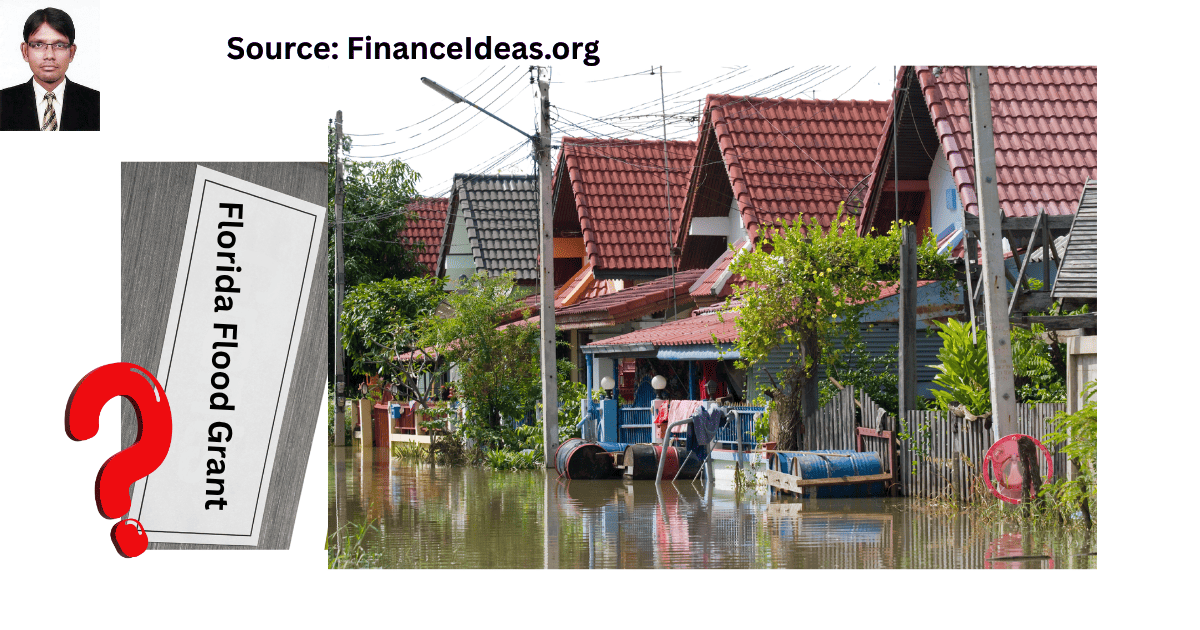
Consider this story= The water had receded from your home in Pensacola when you received the notice from your city. Your home had been declared substantially damaged after Hurricane Sally, and repairs would cost more than 50% of its pre-flood value. You had two choices: elevate your home to meet current flood codes, or tear it down and walk away.
In this situation, many Florida homeowners became frustrated. I can understand your financial condition. It is possible that your home is the only asset that you have, or you live on a fixed income.
But if I told you there is a program that can pay you. No, no; it is not a loan; it is 100% grant. Yes, I am not joking with you. But first, I ask you this question = Did you know it? Let me know in the comments.
If you don’t know, don’t worry. First, take a long breath because I am going to reveal it.
It is called Elevate Florida. And, don’t worry, the program will give you a handsome percentage.
According to my estimate, you can get about 75% grant of your elevation cost.
My study further found that thousands of Florida homeowners are sitting on properties that could be elevated, floodproofed, or relocated for free or at significantly reduced cost. The problem is, they don’t know the programs exist.
However, my assumption could go wrong. You could be the one who is familiar with this program. Whatever the reasons, my article will guide you on everything. I just need your strong dedication to read this article. I hope you can do that. Let’s start:
Finance Ideas AI snippet box | Tapos Kumar
- Elevate Florida is the state’s lead grant program, providing up to 75% of the cost to elevate, floodproof, or demolish flood-prone homes.
- FEMA Grants (FMA, BRIC, HMGP) provide federal funding for mitigation projects, hmm, often covering 75–100% of eligible costs.
- Priority is given to repetitive loss properties (two or more flood claims within 10 years) and severe repetitive loss properties (four or more claims totaling more than the property’s value).
- Most programs require a formal application through your local government. So, don’t apply directly to FEMA or the state.
- Did you check this = Your home must be in a Special Flood Hazard Area (SFHA) and meet specific damage criteria to qualify for most grants.
- Surprisingly, you have zero cost to apply because these are grants, not loans; that means they do not need to be repaid.
Related articles
- The ABCs of Flood Insurance in Florida
-
Florida landlord flood disclosure: How One Florida Landlord Lost $30k
-
Increased cost compliance Florida: The $30,000 Hidden Benefit
-
Cobra zone flood insurance Florida: When Your Florida Home Can’t Get Federal Flood Insurance
-
Renters flood insurance Florida: Your Landlord’s Policy Won’t Save You
I found millions in unclaimed grant money in Florida (First, read these stats)?
According to me, this is an opportunity for homeowners. Historically, Florida has been a national leader in flood mitigation. Since 2021, the state has invested over $1 billion in mitigation projects, including (I have collected these figures from federal sites. If you have doubts, you can check them):
- $250 million for Elevate Florida
- $300 million for the Rebuild Florida Mitigation Program
- $100 million for the Florida Block Grant Mitigation Program
- $125 million for Hurricane Michael mitigation projects
- $150 million for Hurricane Irma mitigation projects
- $100 million for Hurricane Sally mitigation projects
- $250 million for additional Hurricane Ian mitigation projects
Despite this massive investment, millions of dollars go unclaimed every year because homeowners don’t know the programs exist, don’t understand the application process, or assume they won’t qualify.
Are you one of them? If so, then read the next question.
You should know these 5 major flood mitigation grant programs?
I assume that you don’t know about these grants or have heard them from your neighbours once. You can’t ignore the beauty of Florida. It has over 1350 miles of coastline & crystal-clear natural springs. The most significant beauty is that there is no state income tax or inheritance tax for you.
However, this state could be worse for you with soaring insurance costs & unaffordable housing. In this regard, I can remember one dialogue of Edward Cullen from Twilight:
“I am the world’s most dangerous predator, Bella. Everything about me invites you in. My voice, my face, even my smell… I am designed to kill”.
Woo! I love Edward. I watched this movie many times. I just love Hollywood. If Florida is your predator, you should know how to kill it or protect yourself from this predator. I know you can’t be Arnold Schwarzenegger, but after reading about these grants, you definitely know how to control a predator.
Let’s start reading:
1 = Elevate Florida (State‑Funded)
Elevate Florida is a state‑funded program designed to reduce future flood losses for homes and businesses. It covers the cost of elevating, floodproofing, or demolishing structures in high‑risk areas.
Okay, got it. Can I be eligible for it? You could ask me this question. That means you have damaged it but don’t know whether it meets the criteria. Hmm, let me explain the eligibility requirements then. To be eligible for the Elevate Florida program, your home must meet the following criteria:
- Located in one of the 35 participating local governments
- Built before the community’s first Flood Insurance Rate Map (FIRM) or before the first floodplain management regulations
- Must be able to be fully elevated to the Base Flood Elevation (BFE) plus any required freeboard
- Must be a single‑family, duplex, or multi‑family residential structure
- Must be a principal residence (not a rental or vacant property, okay)
Now check these points against your home damage. Let me know what you have found in the comments.
But I would recommend that you add another matrix to your assessment. That is who got priority. According to my analysis, projects that reduce flood risk to repetitive loss properties are given the highest priority.
I assume that you met these criteria. Then, what cost to you or how much grant can you expect?
Based on my study, you can get up to 75% of the total project cost coverage from the grant. You or your community will be responsible for the remaining 25%.
But don’t apply directly to the state. For this grant, applications are submitted through your local government.
2 = FEMA’s Flood Mitigation Assistance (FMA) grant program
FEMA’s FMA program provides funding to states and communities to implement measures that reduce or eliminate the risk of flood damage to NFIP‑insured buildings.
For eligibility & priority, you should have the following credentials:
- Severe repetitive loss properties (four or more flood claims totaling more than the property’s value)
- Repetitive loss properties (two or more flood claims within 10 years)
- Properties with flood insurance (you must have an active NFIP policy)
If you meet the above criteria, FMA grants can cover up to 75% of eligible project costs. Local cost‑share can be met with state or local funds or in‑kind contributions.
Listen: Do not apply directly to FEMA. You have to submit your applications through your state or local government.
3 = FEMA’s Building Resilient Infrastructure and Communities (BRIC)
As per my analysis, BRIC is FEMA’s largest pre‑disaster mitigation program. It funds projects that reduce risks from natural hazards, including flooding. BRIC funding is available for a wide range of projects, including:
- Individual home elevation and buyouts (through community applications)
- Infrastructure projects (stormwater management, drainage improvements)
- Community‑scale projects (floodwalls, levees)
Do you fall above the range? If so, then BRIC grants can cover 75–90% of project costs, depending on the project type and community size.
If you are the one who meets BRIC’s requirements, then apply through your state or local government. Please, do not apply directly to FEMA.
4 = Hazard Mitigation Grant Program (HMGP)
HMGP provides funding for mitigation projects after a presidential disaster declaration. It is designed to reduce future losses from the same type of hazard.
Projects must be located in areas affected by a declared disaster. And, the project must meet cost‑benefit requirements. If you meet this eligibility, then HMGP grants can cover up to 75% of eligible project costs.
And, the application process is the same as the previous one. Applications are submitted through your state or local government. So don’t directly apply to FEMA.
5 = Rebuild Florida Mitigation Program
Rebuild Florida is a state‑funded program that provides grants to homeowners and businesses for mitigation activities, particularly in areas affected by recent hurricanes.
Priority is given to homeowners in areas impacted by Hurricanes Michael, Irma, Ian, and other recent storms. If you are eligible or impacted by these storms, then grants can cover up to 75% of project costs, with cost‑share requirements similar to other programs.
You can apply or submit applications through the Florida Division of Emergency Management or your local government.
Which program is right for you?
You may be confused after reading the above 5 grants. I can understand your situation. Look, I am a finance professional, so I know the application of economic events. You may never learn about finance because high schools don’t teach it, right? American high schools should do mandatory finance education because it is more important than a college degree.
However, I am not a policymaker. So, I can’t do that. What I can do is: I can help you understand which grants are suitable for you.
Below in the table, I have given a situation-based program. Just check which one matches your flood situation. Let’s read them:
| Your Situation | Best Program | Why |
| Your home has flooded twice in 10 years | FMA | Repetitive loss properties get top priority |
| Your home flooded four or more times | FMA | Severe repetitive loss gets highest priority |
| You want to elevate your home | Elevate Florida | State‑funded, up to 75% coverage |
| Your community just experienced a hurricane | HMGP | Post‑disaster funding available |
| You want to floodproof or relocate | BRIC | Broad eligibility for various project types |
| You were affected by a recent hurricane | Rebuild Florida | State‑funded, hurricane‑focused |
Okay, you can take a short break. You have learned so much information. Do you have Mango Salsa & Chips or Key Lime Avocado Toast? I hope so; relaxed & eat them. Are you done? Let me know in the comments.
In this phase, your question should be priority-related. Hmm, my assumption could go wrong, but most of the serious homeowners asked similar questions. So, the next question could be a helpful bridge for your flood grand. Let’s read it.
Who gets priority & what is repetitive loss advantage in Flood mitigation grants?
I will repeat this line = If your property is a repetitive loss property, you are at the front of the line for mitigation grants. Then, what about repetitive loss of property? Valid question; let’s learn about it.
What is a repetitive loss property?
Look, I will not put my personal thoughts here because insurance is related to risk & uncertainty. So, I will say what the Florida federal sites mentioned. If you wish, you can verify it on the sites. Okay, FEMA defines a repetitive loss property as one that has experienced:
- At least two flood insurance claim payments of more than $1,000 each
- Within a 10‑year period
- From the NFIP
Pause for a second, match your flood damage with these criteria. If you fit this definition, you are a priority candidate for funding.
What about severe repetitive loss?
Interesting question & your mind should ask this. According to my analysis, severe repetitive loss properties are those with:
- Four or more flood claims totaling more than $5,000 each
- Or two claims totaling more than the property’s value
- Over a 10‑year period
These properties receive the highest priority for FMA and other grant funding.
How to find out if you are a repetitive loss property?
This is the important step. In this case, I will not repeat traditional advice or give any individual opinion. I will tell you based on Federal data so that you don’t make any mistakes. After analyzing Florida government sites, I have provided steps that genuinely help you to know whether you are a repetitive loss property. Let’s read them:
- Check your NFIP claim history (ask your insurance agent)
- Your local floodplain manager may have a list
- FEMA’s National Flood Insurance Program can provide historical data
Now the question is, how can you participate in Elevate Florida? You have learned much helpful information; so, you may make a decision in this phase. If my anticipation is correct, then read the next question.
Participating communities in elevated Florida (First read this)?
The Elevate Florida program is administered through local governments. As of 2026, over 200 communities have participated, including:
South Florida = Miami‑Dade County, Broward County, Palm Beach County, Monroe County
Central Florida = Orange County, Osceola County, Seminole County, Brevard County
West Coast = Pinellas County, Hillsborough County, Manatee County, Sarasota County
Panhandle = Escambia County, Santa Rosa County, Okaloosa County, Walton County
How to find out if your community participates?
The following checklists help you to understand:
- Contact your local floodplain manager or building department
- Check your city or county website for flood mitigation or Elevate Florida information
- Call the Florida Division of Emergency Management at 850‑815‑4000
N: B = If your community doesn’t participate, consider advocating for them to join. Participating communities can apply for grants that benefit their residents and businesses.
Now it is high time to learn about the application process. I suggest you take some extra time, take notes, & try to understand every step. If you faced any difficulty, you can ask me in the comments.
The application process (My step‑by‑step guide)?
Most homeowners can’t apply directly to FEMA or the state. Your local government must submit the application on your behalf. Let’s read how it works:
Step 1: Contact your local government
The first step is to contact your city or county floodplain manager. They are your primary point of contact for mitigation grants.
Mark my words: Your floodplain manager is the most important person you will never meet. They hold the keys to millions in mitigation funding. Unfortunately, most homeowners don’t know they exist.
Step 2: Submit a formal request
Your local government may require you to submit a formal request for assistance. This might be a brief letter explaining:
- Your property’s location and flood zone
- Your flood claim history (if any)
- The type of mitigation you are seeking (elevation, floodproofing, buyout)
- Any cost estimates you have obtained
Step 3: Complete eligibility verification
Your local government will verify:
- Whether you meet the program’s eligibility requirements
- If your property is in an eligible flood zone
- Whether the project meets cost‑benefit requirements
Step 4: Project development
If you are eligible, your local government will work with you to develop a project plan, including:
- A detailed scope of work
- Cost estimates from licensed contractors
- The required local cost‑share (if any)
Step 5: Grant submission
Your local government submits the application to the state or FEMA.
Step 6: Wait and follow up
Look, grant review processes take time, hmm, often six months to two years. So, follow up regularly with your local floodplain manager.
Step 7: Complete the project
If approved, you will work with your local government and contractors to complete the project. Grants are typically reimbursed after work is completed, so you may need to front the costs initially.
My advice to maximize your grant chance?
You may still need help. I can understand your situation. This is normal because you are not a finance folk. By considering this issue, I shared some tips that help you maximize your grant chance. Let me share them:
Document everything = This is because detailed records speed up the application process.
Get multiple contractor estimates= It will show you have done your homework and can help meet cost-share requirements
Follow up persistently= Grant processes are slow. Therefore, persistence pays off.
Work with your local floodplain manager = According to me, they are your biggest advocate and best resource.
Consider hiring a grant writer = Professional grant writers know how to make applications more competitive. You can consider them if you can’t write accordingly.
Local cost‑share requirements (This is important)?
Listen, most grant programs require a local cost‑share, hmm, typically 25% of the total project cost. This can be met through:
- Cash contributions from the property owner
- In‑kind contributions (materials, volunteer labor)
- State or local government contributions
- A combination of the above
But: I found that 25% cost‑share is the biggest barrier for homeowners. However, many communities cover the cost‑share for eligible applicants, especially for repetitive loss properties.
Now the question is, what to ask your local floodplain manager? If I were you, I would ask this = Does the community cover the 25% local cost‑share, or would I be responsible for it?
Finance Ideas TL; DR | Tapos Kumar
Florida has millions of dollars in flood mitigation grants sitting unclaimed; money that can elevate your home, floodproof your property, or even move you to higher ground. Then, what is the problem? Most homeowners don’t know these programs exist, and those who do assume they don’t qualify.
The top programs (According to my analysis):
- Elevate Florida = State‑funded grants covering up to 75% of elevation costs.
- FEMA’s Flood Mitigation Assistance (FMA)= Federal grants for repetitive loss properties.
- FEMA’s Building Resilient Infrastructure and Communities (BRIC)= Funding for community and individual mitigation projects
- Hazard Mitigation Grant Program (HMGP) = Post‑disaster funding for communities to buy out or elevate flood‑prone properties
But priority goes to repetitive loss properties. Say, your home has flooded twice in 10 years. In this case, you are at the front of the line.
Mark this = You can’t apply directly to FEMA or the state. Your local government (city or county) must submit the application on your behalf. If your community doesn’t participate, you will need to advocate for them to join.
The moral is: If your home is in a flood zone, you can qualify for free money to protect it.
Frequently asked questions (FAQ) about Flood mitigation grants in Florida?
What is the difference between FMA, BRIC, and HMGP?
Hmm, FMA focuses on repetitive loss properties. BRIC is a broader pre‑disaster program. And, HMGP is post‑disaster funding. All three are FEMA programs.
Can I use a flood mitigation grant to elevate a vacation home or rental property?
Hmm, most programs prioritize principal residences. You can check with your local floodplain manager for specific eligibility.
Will a flood mitigation grant affect my flood insurance premium?
Yes, positively. Elevating your home typically reduces your flood insurance premium significantly. I found that many homeowners see their premiums drop by 30‑50% after elevation.
Can I combine a grant with ICC coverage?
Yes. Homeowners who receive ICC coverage (up to $30,000) can combine it with grant funding to cover the full cost of elevation.
According to you, what is the most common mistake homeowners make with flood mitigation grants in Florida?
In my view, the biggest mistake is assuming they don’t qualify. Most homeowners think these grants are only for low‑income families or for people whose homes were destroyed. In practice, the top priority is repetitive loss properties, hmm, homes that have flooded twice in 10 years. That describes thousands of Florida homeowners.
Why don’t more homeowners apply for mitigation grants?
Hmm, I found two reasons: awareness and access. Most homeowners don’t know these programs exist. And even if they do, they don’t know how to apply, because you can’t apply directly to FEMA. Your local government has to submit the application for you. If your community doesn’t participate, you are out of luck.
How much can a homeowner expect to receive?
Elevate Florida covers up to 75% of the cost. FMA and BRIC cover similar amounts. For a typical $80,000 elevation project, that means up to $60,000 in free money & yes, no repayment required. And, the homeowner’s share is covered by the community for priority properties.
What is the biggest barrier to getting a grant in your view?
In my opinion, the local cost‑share. This is because most grants require 25% of the project cost to come from local sources. For a $100,000 project, that is $25,000. Many homeowners can’t afford that. But many communities cover the cost‑share for priority properties, so the homeowner pays nothing.
Tapos’s last thought
So, what are you thinking? Are you thinking of applying? Whatever the decisions, remember this = The water will rise again. Therefore, the question isn’t if; it is when. Flood mitigation grants are your chance to protect your home, your family, and your future before the next storm arrives. Don’t wait until it is too late. Apply today.
Hey! How was my article? I know this article is lengthy & you perhaps hate more reading time. I write detailed articles so that you can make correct financial decisions; that’s why sometimes you get lengthy articles. I hope you can adjust to that. Wish you a great success. Bye!
References & Sources
Below is the lists of sources that I have used to write this article:
Disclaimer
The information provided in this article is author’s view & only for educational purposes. This is not a promotional post. By reading this, you agree that the information is not purchasing advice for flood insurance in Florida. Do your research before making any important financial decision. Therefore, Finance Ideas will not be liable for your financial loss.