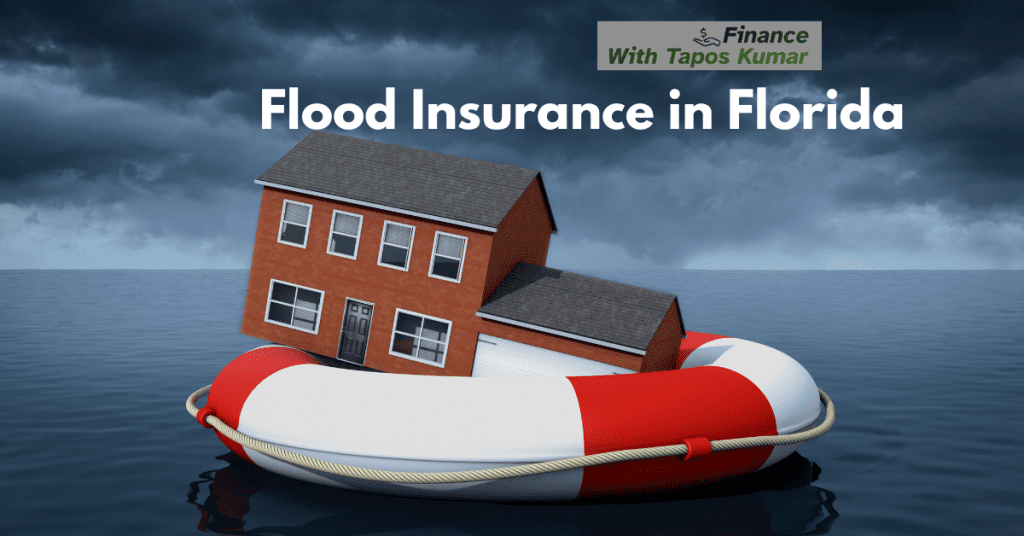
The letter arrived six months after Hurricane Helene. Wendy and Phil Durocher thought they had done everything right. They had flood insurance. They had made repairs. They thought their home was safe.
Then the county told them their mobile home was substantially damaged, meaning the cost to repair exceeded half the structure’s value. Under FEMA rules, their home would have to be torn down or elevated approximately 10 feet.
Look, I study Florida federal sites for mobile home flood insurance & write the above imaginary story. I don’t know whether you relate to my imagination, but our study found that many Floridian mobile homeowners experience this. If you are one of them, cool down! You are not alone.
Our study found that more than 1,405 Pinellas County homes were identified for storm damage that exceeded half the structure’s value. Nearly all were mobile homes.
If you encountered a similar incident, then I can anticipate what you can do next.
You spent months gathering evidence, calling county employees, and scouring government websites for any clue that could demystify the rules.
I am saying this because our study found that more than 80% of appeals came from mobile-home owners. Many were seniors on fixed incomes who had no idea their homes were at risk until it was too late.
So, you are fighting against a system that doesn’t understand your situation, right? If so, then you are in the correct article. I am writing this article to guide you to understand the special rules, hidden risks, and practical solutions for flood insurance on mobile homes in Florida. Let’s start.
Finance Ideas AI snippet box | Tapos Kumar
What does the mobile home insurance crisis mean for Florida’s housing market?
According to our analysis, Florida is projected to face a deficit in senior housing units by the end of the decade. Mobile homes represent the state’s most affordable housing stock, and they are disappearing.
As a consequence, the substantial damage rule, the collapse of the mobile home insurance market, and the skyrocketing cost of flood coverage are pushing the state’s most vulnerable residents out of their homes. In my opinion, Florida chooses insurers and their profits over homeowners. Therefore, the crisis isn’t only about insurance; instead, it is about whether Florida can afford to keep its most affordable housing communities intact.
Related articles
- The ABCs of Flood Insurance in Florida
-
Florida landlord flood disclosure: How One Florida Landlord Lost $30k
-
Increased cost compliance Florida: The $30,000 Hidden Benefit
-
Cobra zone flood insurance Florida: When Your Florida Home Can’t Get Federal Flood Insurance
-
Renters flood insurance Florida: Your Landlord’s Policy Won’t Save You
In my view, mobile homes are different?
Mobile homes, also called manufactured homes, face unique flood risks due to their construction. Let me explain construction on a point-by-point basis:
Construction: Mobile homes are built on a chassis with wheels and axles, making them more vulnerable to displacement
Foundation: Often not permanently affixed to the ground like site-built homes
Elevation: Many older models sit closer to the ground, increasing flood risk
Location: More likely to be located in flood zones, according to CoreLogic data
The vulnerability: Mobile home residents are far more vulnerable to hurricane impacts than site-built home residents. In the Tampa area alone, there are about 50,000 mobile homes, and around Tampa Bay, 11% of mobile homes are in flood zones.
The age problem: Approximately 72% of Florida’s 828,000 mobile homes are older models that will not provide adequate protection against severe weather. State records show nearly 700,000 of Florida’s more than 1 million mobile homes aren’t built to withstand today’s storms. Nearly a quarter of a million were built before the federal government regulated these homes at all.
What makes a mobile home insurable under NFIP?
The NFIP has specific rules for mobile homes that don’t apply to site-built homes. To be eligible for flood insurance, you need to focus on the following:
Permanent foundation required: Your mobile home must be affixed to a permanent foundation. A permanent foundation can be:
- Poured masonry slab
- Foundation walls
- Piers or block supports
Remember my words: The foundation must support the mobile home so that the wheels and axles support no weight. If your home has wheels or axles supporting weight, it will not qualify for NFIP coverage.
Anchoring required in flood zones: If your mobile home is located in a Special Flood Hazard Area (SFHA), it must be anchored to a permanent foundation to resist: Flotation, collapse & lateral movement.
Acceptable anchoring methods:
- Over-the-top or frame ties to ground anchors
- Manufacturer’s specifications &
- Community’s floodplain management requirements
Strapped down meets the definition
According to my analysis, mobile homes that are strapped down meet the definition of being permanently affixed. A flood determination is required, and if the home is located in a high-risk zone, flood insurance is mandatory.
Serial numbers required
Mobile homes require special handling for flood insurance policies due to serial numbers. Make sure your insurance agent has your home’s serial number when applying.
Mark my words: A mobile home on wheels isn’t insurable under NFIP. To qualify for flood coverage, the wheels and axles can’t support any weight; the home must rest entirely on a permanent foundation.
NFIP vs. Private flood insurance for mobile homes?
I think you are making some decisions, but are confused about them. Is my guess correct? If so, you are actively reading my article. If not, then you may be experiencing mobile home insurance issues for the first time. Whatever the reasons, it is high time to choose a policy. We found that most mobile home owners can’t decide which is better between NFIP & private policy. Based on this, we have provided a feature-based comparative analysis to help you make monetary decisions. Let’s read them:
| Feature | NFIP mobile home coverage |
| Building coverage | Up to $250,000 |
| Contents coverage | Up to $100,000 |
| Average annual premium (Florida) | $838/year |
| Waiting period | 30 days |
| Eligibility | Must be on permanent foundation, properly anchored |
Private flood insurance
Private flood insurers can offer:
- Broader coverage than NFIP
- Faster claims service
- Flexible underwriting for elevated platforms &
- Higher coverage limits
However, Private flood insurance for mobile homes can be extremely expensive. According to our analysis, one flood insurance policy in low-lying Fort Myers can cost as much as $11,000 for a mobile home, hmm, double the price of a wind policy. For many seniors on fixed incomes, that is impossible to bear. And that is the reason why thousands of Florida mobile home owners are going uninsured.
Then the market is stressed. Florida regulators have extended supervision of American Mobile Insurance Exchange for the sixth time in two years as the mobile home insurance market struggles. I think there will be a growing need for a more developed private flood market tailored to mobile homes.
What is substantial damage?
Have you chosen your insurance policy? Let me know in the comments. But I recommend that you hold off now. Before making final buying decisions, you should understand what constitutes substantial damage. You perhaps know about it, or it is a new term for you. Anyway, I will not complicate it or give you my personal definition. I will define it according to FEMA. Let’s read the definition.
Under FEMA rules adopted by most Florida counties, a home is deemed substantially damaged if the cost to repair the home is 49% or more of its value without the land.
What happens when you are substantially damaged?
Okay, got it. I am not a finance student, a homeowner. So, tell me what happens if this damage hits my home. I understand your concern & I will address it directly here. If your mobile home is declared substantially damaged:
- You cannot repair and rebuild; you must bring the home into compliance with current floodplain regulations
- This typically means elevating your home approximately 10 feet to meet NFIP requirements
- Or you must relocate or demolish the structure
Why is mobile home flood insurance so expensive in Florida?
Yeah, the American economy has changed. Now the middle class has become the new poor, and the millionaires have become the new middle class; additionally, Americans bow down to inflation. You perhaps searched on Google or an AI, but were shocked to see the price of mobile home flood insurance. Yes, you are correct & here I will explain why. Let’s read:
Premiums are soaring: I have to repeat this = The average NFIP premium for mobile homes in Florida is $838 per year. But in high-risk coastal areas, policies can exceed $11,000 per year for a mobile home, double the price of a wind policy
Then, the average mobile home annual premium in parts of southwest Florida is $5,000, which is more than some non-mobile, single-family dwellings in comparable areas.
Age matters: If it is 1994 or newer, you have options. If it is older, there aren’t many,” said John Gardner, principal at Lee County Insurance. So, check your home.
Reinsurance costs haven’t eased: Unlike other lines of business, reinsurance costs for mobile home risk have not declined. Catastrophe modelling always shows significant losses, especially on older units.
Elevation platforms add complexity: Many newer mobile homes are elevated above flood levels, but some carriers aren’t sure how to underwrite the platforms, which can cost thousands of dollars to build. One carrier agreed to cover the structures, but only if the home is at least 4 miles from the coast.
The Citizens dilemma: Florida’s state-created insurer of last resort requires flood insurance for most policies by January 2027. We predict that over 30% of mobile homes with Citizens will voluntarily go without insurance because of the flood insurance requirement. This trend may already be happening because Citizens’ mobile home policies have dropped from 89,284 to 76,745 (Our prediction is based on federal data).
How to protect your mobile home in Florida?
“A woman’s heart is a deep ocean of secrets,” I recall in my mind the old Rose from Titanic. Awh! My favourite heroine, you just perfectly reflect a woman’s inner & outer feelings. If I compare the natural beauty of Florida with the inner, then the natural calamities should be outside, which is full of mystery.
Okay, I can understand that Florida has a complex insurance policy. I said ‘complex’ because translating regulatory insurance information requires high-level financial skills. I am not ignoring you; I am just telling the truth. And this is a common problem among mobile home owners, who often misunderstand flood insurance.
By considering the issues above, I am writing a solution that guides you on how to resolve insurance issues so you can save your mobile home. Let’s read them.
- Verify your foundation and anchoring
Before you buy flood insurance, confirm that your mobile home meets NFIP requirements:
- Permanently affixed to a foundation (slab, piers, or foundation walls)
- No weight supported by wheels or axles
- Properly anchored to resist flotation, collapse, and lateral movement
- Strapped down meets the definition of permanently affixed
- Buy flood insurance early
Look, I am not provoking you for selling. You have to understand that NFIP has a 30-day waiting period. Do you want to wait until a storm is approaching? This is not a wise decision; instead, you should buy coverage before hurricane season (before June 1).
- Consider private flood insurance
Private flood insurers can offer broader coverage and faster claims service. Compare NFIP and private options through an independent agent. Look, I am not affiliating. If you doubt, you can study on your own or simply consult your advisor.
- Document everything
If your home is damaged:
- Take photos and videos immediately
- Keep all receipts and contractor estimates
- Track all communications with your insurer and local officials
The above task will speed up your process. Also, you feel confident & have a better success ratio.
- Know the substantial damage rules
Understand your county’s substantial damage threshold (typically 49% of home value without land). If your home is damaged, get multiple repair estimates before accepting any determination.
- Work with your local floodplain manager
Remember = Your local floodplain manager is your best resource for understanding flood zone requirements and mitigation options.
- Consider elevation
If your home is in a high-risk flood zone, then consider elevating it to reduce future risk and potentially lower your insurance premiums.
Finance Ideas TL; DR | Tapos Kumar
I found that mobile homes in Florida face unique flood risks and unique insurance rules. You should know that your standard mobile home policy does not cover flood damage. So, you need a separate flood policy through NFIP or a private insurer.
To qualify for NFIP flood insurance, your mobile home must be affixed to a permanent foundation and properly anchored. If it has wheels or axles supporting weight, it will not qualify.
But: Say your home is damaged and the cost to repair exceeds 49% of its value without the land. In this case, FEMA will declare it substantially damaged & forcing you to elevate, relocate, or demolish. This rule has devastated thousands of Florida mobile home owners after recent hurricanes.
The moral is: Mobile homes are more vulnerable to flooding than site-built homes. If you own one in Florida, flood insurance isn’t optional; it is essential. But you must understand the special rules that apply to your home.
Frequently Asked Questions (FAQ) about mobile home flood insurance in Florida?
Can I get flood insurance for a mobile home in Florida?
Yes, if your mobile home is affixed to a permanent foundation and properly anchored.
What is the difference between a mobile home and a manufactured home?
Hmm, a mobile home is built on a chassis and can be moved. A manufactured home is the same, but built after the 1976 federal standards. A modular home is made in sections at a factory and assembled at a fixed site.
How much does flood insurance cost for a mobile home in Florida?
The average NFIP premium is $838/year, but it can exceed $11,000/year in high-risk coastal areas.
What are the NFIP coverage limits for mobile homes?
Up to $250,000 for building and $100,000 for contents, hmm, the same as site-built homes.
Are older mobile homes insurable?
It depends. Homes built after 1994 have more options. Older homes can struggle to find coverage.
Are mobile homes more vulnerable to flooding than site-built homes?
Yes. State records show about 700,000 of Florida’s more than 1 million mobile homes aren’t built to withstand today’s storms. Approximately 72% are older models that will not provide adequate protection. Mobile homes are built on a chassis with wheels and axles, making them more vulnerable to displacement. They are often located in flood-prone areas and sit closer to the ground. And the roughly half a million residents aged 70 and older are among the most financially vulnerable populations in the state. Therefore, this isn’t just an insurance problem; instead, it is a humanitarian crisis waiting to happen.
What if my mobile home is in a mobile home park?
The same rules apply, i.e., you need separate flood coverage. The park owner must also provide flood disclosure to prospective lessees.
Can I elevate my mobile home to reduce flood risk?
Yes. Elevating your home can reduce flood risk and lower your insurance premiums. However, elevation platforms can be expensive, and some carriers aren’t sure how to underwrite them.
Tapos’s last thought
Florida’s mobile homes are the canary in the coal mine for the state’s insurance crisis. If we can’t figure out how to ensure the most vulnerable homes in the most vulnerable communities, what does that say about the future of Florida’s housing market? Anyway, this is my opinion after analyzing federal sites.
Additionally, I have to agree that Florida’s mobile home owners are facing a perfect storm. The insurance market is collapsing, with the state’s dominant mobile home insurer under regulatory supervision for the sixth time in two years, and then unaffordable premiums prices.
Therefore, the 49% rule doesn’t care if you are a retiree on a fixed income or a family with nowhere else to go. It applies equally to everyone and is devastating Florida’s most affordable housing stock.
I hope my article helps you. If you can manage a few seconds, please let me know your experience with this article in the comments. And don’t hesitate to ask me in the comments if you have any further questions. Bye!
References & Sources
Below is the lists of sources that I have used to write this article:
- FEMA (Manufactured Home Installation in Flood Hazard Areas)
- 44 CFR (Floodplain Management Regulations)
Disclaimer
The information provided in this article is author’s view & only for educational purposes. This is not a promotional post. By reading this, you agree that the information is not purchasing advice for flood insurance in Florida. Do your research before making any important financial decision. Therefore, Finance Ideas will not be liable for your financial loss.