Imagine = The message came at 2:47 AM.
“Hurricane warning extended. Mandatory evacuation ordered for your area. All guests must leave by noon.”
For you, I imagine you are a vacation rental owner in Destin; that text message didn’t only mean lost bookings. It meant your $600,000 investment was sitting empty, at risk of whatever the storm would bring. You had homeowners insurance. You had liability coverage, & you had loss of rents protection.
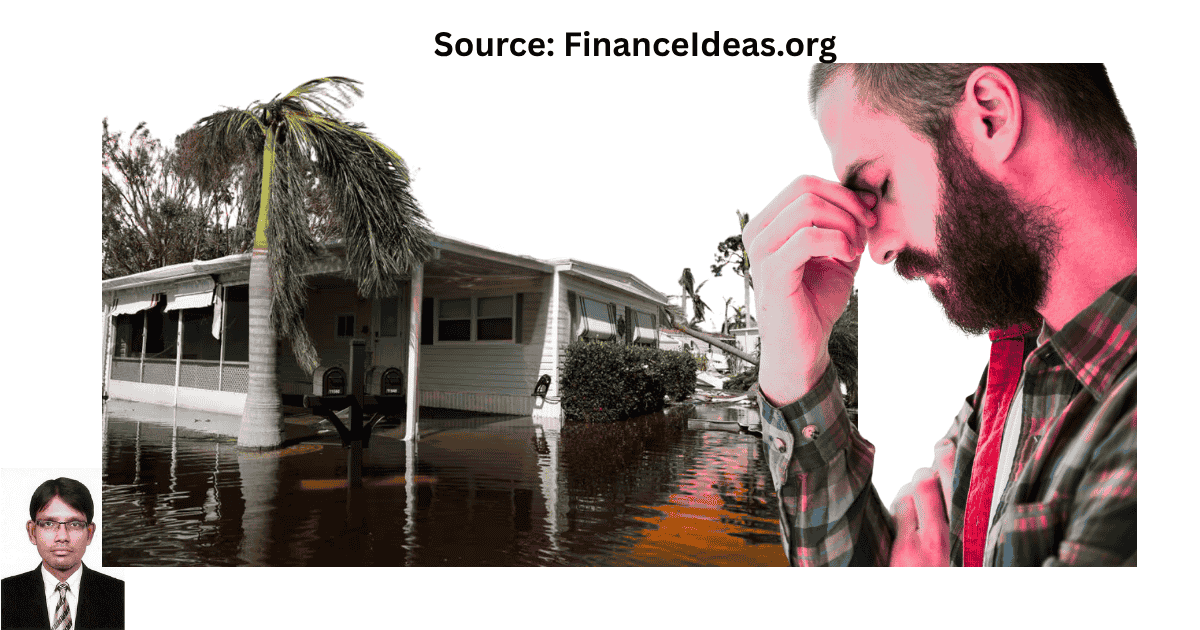
Unfortunately, you didn’t have flood insurance. As a consequence, when storm surge pushed 3 feet of water into your ground-floor unit, the insurance company told you = Flood damage is excluded from your policy. Yeah, repeated line & you hate to listen.
I know, I am not a story specialist. But this similar story plays out across Florida every hurricane season.
In my view, vacation rental and second-home owners are among the most vulnerable (and most misunderstood) property owners in the state. This is because their insurance needs differ from those of primary homeowners. Their risks are greater, and their coverage gaps are wider.
You are reading this article, so I can assume that you own a property that generates rental income, or one you don’t live in full-time. Whatever the facts, I am writing this article to help you understand flood insurance for vacation rentals and second homes in Florida.
One small request = Please don’t skim my article or read fast. I have written to solve your insurance problems. So, it needs time to understand & apply to your problems. So, take 1 Florida orange juice or Loose-leaf teas; & start reading:
Finance Ideas AI snippet box | Tapos Kumar
How big is Florida’s vacation rental market, and why is it important for insurance?
According to our analysis, Florida accounts for 26% of the entire U.S. vacation rental market, contributing an estimated $30 billion annually to the state’s economy, including some $840 million in state sales taxes.
In 2024 alone, vacation rental homes across the state hosted around 33 million guests, generating over $12.6 billion in revenue. Therefore, this isn’t a micro market; according to me, it is a massive economic engine. Unfortunately, that engine runs on insurance. And right now, the insurance market for vacation rentals is under immense pressure, with premiums rising 10%‑30% annually in many areas (our forecasting based on federal data). For these reasons, if we don’t figure out how to properly insure these properties, we risk destabilizing a $30 billion industry.
Related articles
- The ABCs of Flood Insurance in Florida
-
Florida landlord flood disclosure: How One Florida Landlord Lost $30k
-
Increased cost compliance Florida: The $30,000 Hidden Benefit
-
Cobra zone flood insurance Florida: When Your Florida Home Can’t Get Federal Flood Insurance
-
Renters flood insurance Florida: Your Landlord’s Policy Won’t Save You
The truth of vacation rentals and second homes in Florida (My honest opinion)?
Florida has one of the largest vacation rental markets in the world. From the white sands of Destin to the vibrant energy of Miami Beach, from the Disney corridor to the Florida Keys, hundreds of thousands of properties generate rental income for their owners.
But owning a vacation rental or second home in Florida isn’t like owning a primary residence. The insurance requirements are different. The risks are greater. And the coverage gaps are wider.
What makes vacation rentals different?
So, your mind is asking: What makes vacation rentals and second homes different? I can understand your questions; perhaps your advisors never recommend you. Trust is an important factor in insurance, and I can see your loyalty to your finance advisor.
Anyway, let’s come to the point. Below, in the table, I have provided a comparative analysis to help you make insurance decisions. Let’s read them:
| Factor | Primary home | Vacation rental/Second home |
| Occupancy | Owner lives there full-time | Often vacant for extended periods |
| Use classification | Residential | Commercial (public lodging under Chapter 509, Florida Statutes) |
| Standard policy | Homeowners (HO-3) | Does not apply; commercial use excluded |
| Required policy | Homeowners | DP-3 dwelling or commercial habitational |
| Flood coverage | Separate policy needed | Separate policy needed, but with higher limits |
| Loss of rental income | Not applicable | Critical coverage; NFIP does not cover it |
| Vacancy restrictions | Limited | Significant; insurers can limit coverage if vacant >30-60 days |
| Guest liability | Limited | High; guests are third parties; need general liability |
My neutral opinion: According to Finance Ideas, Florida’s vacation rental market is a $30 billion industry (I know I repeat this line). Yet most owners are walking into hurricane season with coverage gaps that could cost them their entire investment. Aha, this happens because they don’t understand that a standard homeowners policy doesn’t cover commercial use, and flood is always excluded.
I think Florida’s number 1 threat to vacation rentals is Flood risk?
Florida is one of the highest-risk states in the country for flooding. And vacation rental properties face greater risk for the following reasons:
- They are located in coastal or tourist-heavy areas
- Many are near water (beach, canals, bays)
- Guests increase the chance of property-related incidents
- Loss of income becomes a major issue after a flood
And: flood damage is not covered under standard homeowners, landlord, or most short-term rental insurance policies.
The reality is: A few inches of water can cause:
- Structural damage
- Mold issues
- Furniture and appliance loss
- Business interruption (lost bookings)
Mark my words: A few inches of floodwater can destroy a vacation rental’s profitability for an entire season. But I found that most owners don’t discover their coverage gap until they are standing in 3 feet of water, staring at a denial letter from their insurance company.
NFIP vs. Private flood insurance for vacation rentals?
Hmm, I will not repeat information from my previous article. I have already comparatively analyzed NFIP & Private flood insurance. If you are a new reader, you can read my content clusters (above, below AI snippet box) to learn it.
However, I don’t explain it from the perspective of vacation rentals. So, I will explain NFIP & Private flood insurance for vacation rentals only. Let’s read them:
First, learn NFIP coverage
The National Flood Insurance Program (NFIP) offers flood insurance for rental properties. A standard NFIP policy covers:
- The physical structure of the home
- Plumbing, electrical, and heating systems
- Cabinets and built-in appliances
- Detached garages (if any)
NFIP maximums for vacation rentals:
- Building coverage: $250,000
- Contents coverage: $100,000
Important NFIP limitations for vacation rentals:
Our analysis found some limitations & we think you should know about them before making any financial decisions. Read & mark them:
- No loss of rental income coverage. NFIP does not cover lost rental income during repairs
- 30-day waiting period. New policies take 30 days to become effective
- No temporary housing coverage. NFIP won’t cover hotel stays or temporary rentals
- Actual cash value. Depreciation is factored into payouts (unless you have a replacement cost endorsement)
Mark my words: The NFIP will pay to repair your vacation rental’s structure, but it won’t pay a dime of the rental income you lose while those repairs are happening. For a property that generates $50,000+ in annual revenue, that is a gap & that can break your business.
Let’s talk about private flood insurance?
According to me, private flood insurance is better for vacation rentals. Look, I am not talking about this from a selling perspective. Private flood insurance offers significant advantages for vacation rental owners. Don’t trust me. Okay, first read the table.
| Feature | NFIP | Private Flood Insurance |
| Building coverage | $250,000 max | Up to $10,000,000 |
| Contents coverage | $100,000 (ACV) | $500,000+ (Replacement cost) |
| Loss of rental income | not covered | Covered |
| Loss of use / temporary housing | Not covered | Covered |
| Waiting period | 30 days | 7–14 days typical |
| Elevation certificate required | Often | Many carriers waive requirement |
| Premium | Standard | Potentially lower for moderate-risk zones |
Did you find the significant difference? I hope so; if not, let me know why in the comments. I love to hear personal experience.
Mark my words: Private flood insurance is the secret weapon for vacation rental owners. It covers what NFIP won’t, i.e., loss of rental income, replacement cost on contents, and temporary housing for guests. For a property that generates revenue, that shouldn’t be a luxury; it must be a necessity.
I detected 5 pillars of vacation rental insurance?
Mm, my analysis found 5 vacation rental insurance programs in Florida & thought you should learn about them. It will give you a broader perspective & ultimately help you estimate coverages. Let’s read them:
- General liability
Covers guest bodily injury and third-party property damage. Aha, typical limits: $1,000,000 each occurrence / $2,000,000 aggregate.
- Property / Dwelling
The structure itself, written on DP-3 dwelling or commercial habitational depending on operating model. Coastal Florida properties carry separate named-storm wind deductibles; typically, 2%, 5%, or 10% of dwelling.
- Loss of rents
Rental income during a covered loss, capped by the period of restoration. Florida hurricane evacuation orders and the slow post-storm permitting cycle make an Extended Period of Restoration endorsement particularly relevant.
- Flood insurance
Excluded from every standard property form in Florida. NFIP covers up to $250,000 dwelling / $100,000 contents; private flood markets layer above NFIP to reach actual replacement cost.
- Ordinance & Law
The gap between rebuild cost and code-compliant rebuild cost. Essential for any Florida STR built before current wind-code or elevation requirements, which is most of the inventory in coastal Florida.
In short: A complete vacation rental insurance program isn’t one policy; it is five: general liability, dwelling, loss of rents, flood, and ordinance & law. So if you miss any one of them, you are at risk.
What does vacation rental flood insurance cost?
This should be your question now. My anticipation could be wrong, but I am speaking from my experience handling clients. Whatever the facts, learning about premium costs in advance can help you budget for vacation rental flood insurance.
Let’s read them:
| Property type | Annual premium range |
| Inland single-family STR (Orlando corridor, central Florida) | $2,000–$4,000/year |
| Coastal single-family STR (Panhandle, Gulf and Atlantic beaches) | $4,000–$8,500/year |
| High-value or high-amenity coastal property | $8,500–$15,000+/year |
| Florida Keys (Monroe County) | Often $10,000+/year |
Important note: These are program ranges, so don’t assume single-line quotes. Flood is always a separate policy on top.
Florida’s unique price factors for vacation rental flood insurance?
I found the following are the driving factors:
- Named-storm wind deductible structure = 2%, 5%, or 10% of dwelling value
- Surplus lines placement = many coastal properties can no longer be placed with admitted carriers
- Regulatory classification = vacation rentals are public lodging under Chapter 509, Florida Statutes
30-day waiting period & storm freeze for vacation rental flood insurance?
In my view, this is a timing trap. Many vacation rental owners miss this & suffer financially. You shouldn’t be that one; I suggest you learn about these two critical deadlines to help you avoid risk. Let’s understand them:
Deadline 1= The 30-day NFIP waiting period
You may be familiar with this 30-day deadline because I covered it in my previous article. However, this article is for vacation rentals. So, I decided to explain it from that perspective. I think it will help you understand & prepare in advance for flood insurance risk.
Okay, come to the point. A new NFIP policy carries a 30-day waiting period. Buy it in mid-July, and you have no flood protection until mid-August.
Deadline 2 = The storm freeze
Most Florida carriers stop binding new or amended policies once a named storm enters the Atlantic watch zone- ah, a freeze that can last one to two weeks. In the insurance world, that means your deadline to adjust coverage closes the moment a system is named.
Listen to me: If you wait until a storm is named to buy flood insurance for your vacation rental, it is too late. The 30-day waiting period and the storm freeze mean your deadline closes long before the hurricane makes landfall.
Finance Ideas TL; DR | Tapos Kumar
Hey! Do you own a vacation rental or second home in Florida? If so, listen to me: your standard insurance is not enough. This is because flood damage is excluded from every standard property policy. NFIP caps at $250,000 building / $100,000 contents; and it does not cover lost rental income.
The vacation rental truth in Florida:
- Florida regulates vacation rentals as public lodging under Chapter 509, Florida Statutes
- Standard homeowners forms exclude commercial use
- A named-storm wind deductible can be 2% to 10% of dwelling value
- Flood is always a separate policy on top
Mark this: I assume that your property is used as a short-term rental or sits empty for parts of the year. In this case, you need the following:
- A commercial or DP-3 dwelling policy designed for rental use
- A separate flood policy (NFIP or private) that covers the structure
- Loss of rental income coverage (not available through NFIP, but available through private insurers)
- Ordinance & Law coverage for code upgrades after a flood
Free downloadable PDF resources without e-mail
- Vacation rental flood insurance decision matrix
- Vacation Rental Flood Insurance Checklist for Floridian Owners
- Florida-vacation-rental-flood-insurance-data-report
Frequently Asked Questions (FAQ) about vacation rental flood insurance in Florida?
Can I get flood insurance for a vacation rental through a private carrier?
Yes. Private flood insurance offers expanded benefits, including higher coverage limits and protection for lost rental income.
What is the difference between NFIP and private flood insurance for vacation rentals?
NFIP caps at $250,000 building / $100,000 contents and does not cover loss of rental income. Private flood insurance can offer higher limits, protection for lost rental income, and potentially lower premiums.
How much does flood insurance cost for a vacation rental in Florida?
Aha, flood is typically a separate policy on top of your main STR program. Total STR insurance costs range from $2,000–$15,000+ per year depending on location and property value.
Does Airbnb’s AirCover cover flood damage?
No. Airbnb’s AirCover does not cover flood insurance.
What is a named-storm wind deductible?
Aha, a percentage of dwelling value; typically, 2%, 5%, or 10%; that applies to hurricane damage. On a $600,000 dwelling, a 5% wind deductible means $30,000 out of pocket.
Do I need Ordinance & Law coverage for my vacation rental?
Yes. Ordinance & Law covers the gap between rebuild cost and code-compliant rebuild cost. According to me, it is essential for older properties.
Can I get flood insurance if my vacation rental is in a high-risk flood zone?
Yes. NFIP and private flood insurance are available in all flood zones.
What happens if a guest damages my property during a flood?
In this situation, your flood insurance covers the structure and contents. Guest liability is covered under your general liability policy.
Do I need flood insurance if my vacation rental is not in a flood zone?
Yes. FEMA states that 99% of U.S. counties have experienced flooding in the past 20 years. Remember: floods can happen anywhere.
What is the most important thing I can do to protect my vacation rental?
Aha, buy flood insurance before hurricane season, and make sure it includes loss-of-rental-income coverage. Then verify your named-storm wind deductible and Ordinance & Law coverage.
Why can’t vacation rental owners use a standard homeowners policy?
Mm, because Florida law regulates vacation rentals as public lodging under Chapter 509, Florida Statutes. Standard homeowners policies explicitly exclude commercial use. If you rent your property on Airbnb or VRBO and have a homeowners policy, you are essentially uninsured. The insurer can deny your claim the moment they discover the property was being used as a rental. You need a DP‑3 dwelling policy or commercial habitational policy designed for short‑term rentals. And even then, flood is always excluded, i.e., you need a separate policy
Do vacation rental owners need flood insurance if they are not in a flood zone?
Yes. Let me tell you why. FEMA states that 99% of U.S. counties have experienced flooding in the past 20 years. Florida is one of the most flood‑prone states in the country. Even properties outside designated flood zones are seeing premium increases. And NOAA projects a 10‑12-inch sea level rise along Florida’s coasts by 2050. The flood risk isn’t going away; it is getting worse. For a vacation rental that generates rental income, the cost of flood insurance is a small price to pay compared to losing your investment. So, you should think about it.
Tapos’s last thought
The fact is: Florida’s vacation rental market generates $30 billion annually and hosts 33 million guests. But most owners are walking into hurricane season with coverage gaps that could cost them their entire investment. This is because they don’t understand that flood is always excluded and loss of rental income is never automatic.
So, my advice for you = Don’t wait until the water rises to discover your coverage gaps. Review your policies today. Make sure your vacation rental is protected like the business it is. And I hope my article helps you do that. Goodbye!
References & Sources
Below is the lists of sources that I have used to write this article:
Disclaimer
The information provided in this article is author’s view & only for educational purposes. This is not a promotional post. By reading this, you agree that the information is not purchasing advice for flood insurance in Florida. Do your research before making any important financial decision. Therefore, Finance Ideas will not be liable for your financial loss.